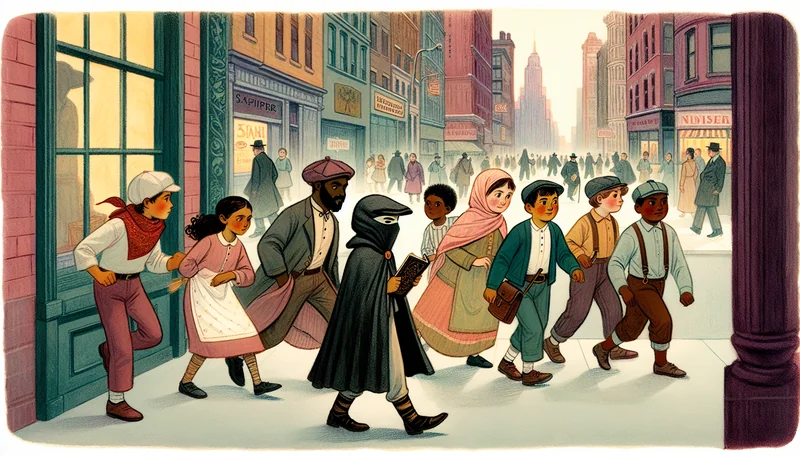
에밀과 탐정들 이야기의 첫째 날이에요! 이번 주의 주제는 'bravery'에 대한 것이에요. 용기란 두려움이 없는 게 아니라 두려움 속에서 행동하는 거예요. 이 이야기는 깊은 의미를 담고 있어요.
등장인물들은 중요한 순간을 맞이해요. 에밀은 무서웠지만 옳은 일을 했어요. 우리도 비슷한 상황을 겪을 수 있어요. 그때 어떤 선택을 할 건가요? 이 이야기를 통해 함께 생각해 봐요. 오늘의 핵심 문장을 잘 기억하세요. 영어로도 이야기를 읽어 볼까요? 진정한 용기는 두려움을 느끼면서도 행동하는 것이에요.
⭐ A1 쉬움
🔤 A1 Easy
Emil had never done anything as frightening as following a criminal through an enormous city alone. He did not know Berlin and he did not know what the thief might do if he realized he was being watched. There were many moments when Emil felt genuinely afraid and wanted very much to stop and go home. But he thought about his mother and about the money and kept moving forward anyway in spite of his fear. When Gustav and the others joined him the fear got smaller but it did not completely go away at all. Emil learned that being brave did not mean having no fear — it meant continuing even when the fear was real. Bravery means acting despite fear.
⭐⭐ A2 보통
🔤 A2 Medium
Emil was afraid during much of his time following Grundeis through the streets and cafes of Berlin. He was afraid of losing the thief in the crowd and afraid of being noticed and afraid of running out of options. These fears were rational — he was one small boy in a large unfamiliar city pursuing a grown man who had already robbed him once. But Emil had decided that the fear was not a sufficient reason to stop, and so he experienced the fear and kept going anyway. The other children felt fear too — some of them worried that the thief might become violent or that the police would not believe them. But they had each made the same decision Emil had made: the fear was real and the action was still required regardless of the feeling. Kästner presents this as the working definition of bravery that his young characters demonstrate again and again throughout the story. Bravery means acting despite fear.
⭐⭐⭐ B1 도전
🔤 B1 Challenge
The concept of bravery that Emil and the Detectives proposes is philosophically precise in a way that rewards attention. The novel consistently distinguishes between fearlessness — which Emil clearly does not possess — and bravery, which he clearly does. Fearlessness would mean that Emil follows the thief without experiencing anything recognizable as fear along the way. Bravery means that Emil experiences the fear fully and chooses to continue acting in spite of it because the action is required. This distinction matters because it locates the moral credit correctly — in the choice to act rather than in the absence of feeling. A person who does something difficult without fear deserves no particular credit — they simply lacked the normal response. A person who does something difficult while experiencing fear has made a genuine and costly moral decision and deserves real credit. Kästner's children are brave in this precise and meaningful sense, which is why their eventual success feels genuinely earned. Bravery means acting despite fear.
📚 이 교재는 저작권이 만료된 공개 도메인(Public Domain) 작품을 기반으로 제작되었습니다.
원문을 직접 인용하지 않고 AI가 교육 목적에 맞게 완전히 새로 작성한 창작 학습 자료입니다. This material is based on Public Domain works. All content has been newly written by AI for educational purposes. No original text was quoted.