
오늘의 핵심 표현을 완성해 보세요!
단어를 탭해서 올바른 문장을 만들어 보세요!
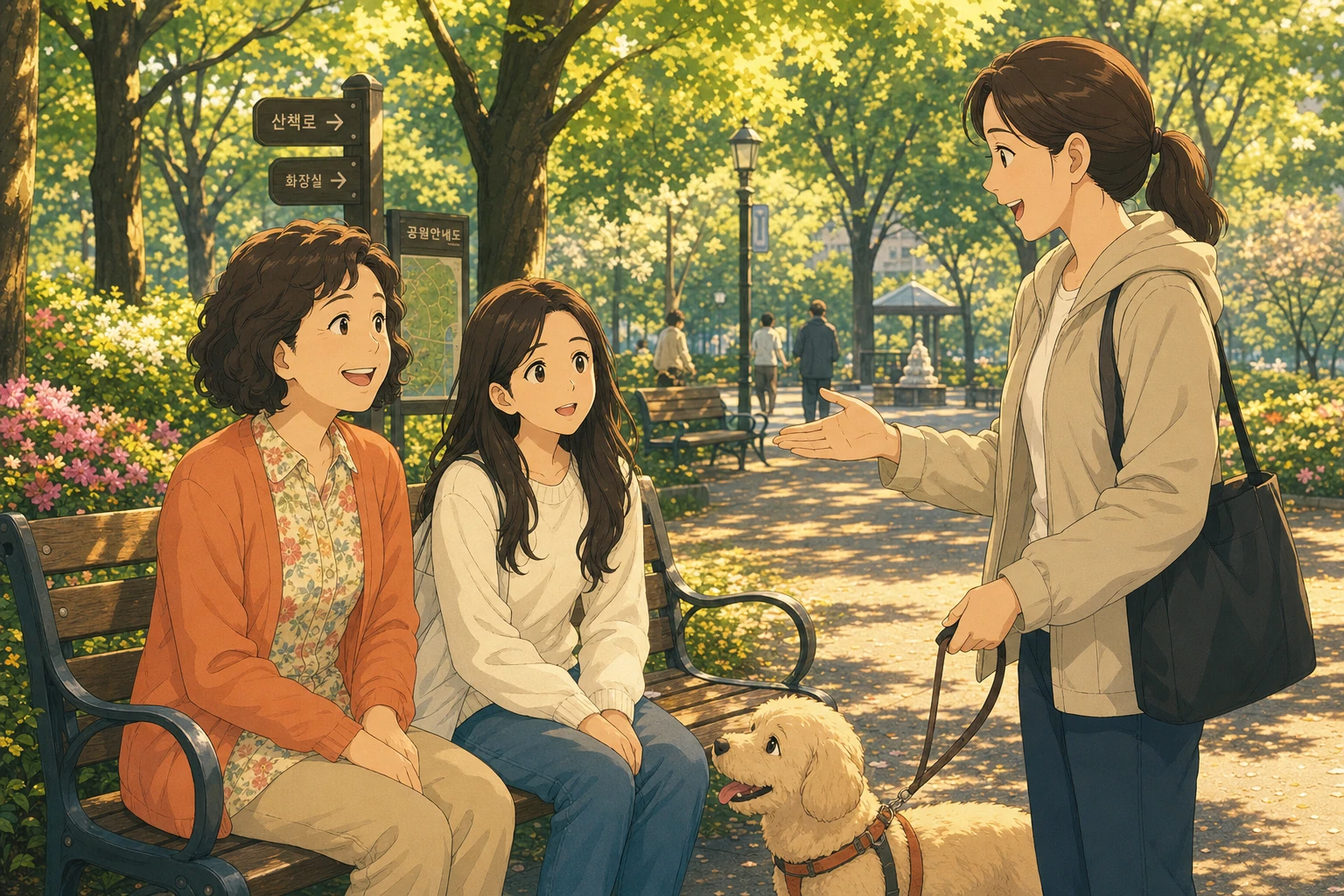
봄날 오후.
영자가 공원 벤치에 앉아서 쉬고 있었습니다.
따뜻한 햇살, 꽃잎이 날리는 바람.
한국의 봄이 생각났습니다.
옆에 나이 드신 미국 노신사가 앉았습니다.
두 사람은 잠깐 조용히 앉아 있었습니다.
노신사가 먼저 말했습니다.
영자가 말했습니다.
노신사가 물었습니다.
노신사의 눈이 반짝였습니다.
영자가 자랑스럽게 말했습니다.
Pink and white. Very romantic. "
노신사가 말했습니다.
영자가 웃으며 말했습니다.
And Korean food — much better. "
노신사가 크게 웃었습니다.
영자가 말했습니다.
노신사가 말했습니다.
영자가 말했습니다.
Harold가 말했습니다.
영자가 웃으며 말했습니다.
Every week I sit here. People walk by. Sometimes we talk.
I learn from everyone. "
Harold가 웃으며 말했습니다.
한 시간 후 영자가 일어서며 말했습니다.
Harold가 말했습니다.
영자가 말했습니다.
Harold가 웃음을 터뜨렸습니다.
집으로 걷는 길에 영자가 생각했습니다.
그리고 한 시간 동안 영어로 이야기했어.
'Beautiful day'라는 두 단어로 시작해서. "
Young-ja sits on a park bench.
An old man sits next to her.
He says, "Beautiful day, isn't it?"
Young-ja says, "Yes! Very beautiful. I love this park."
"You are not from here?"
"No. I am from Korea. Seoul."
"Korea! Is it beautiful?"
"Very beautiful! Cherry blossoms in spring. Pink and white."
The man says, "I am Harold. I live here 40 years."
Young-ja says, "I am Young-ja. Here 8 months."
"Your English is wonderful!"
"Thank you. Still learning. The park helps — I talk to everyone!"
Harold laughs. "The park as a classroom. I like that!"
Young-ja is sitting on a park bench on a beautiful spring afternoon.
An elderly man named Harold sits beside her.
He opens the conversation simply: "Beautiful day, isn't it?"
Young-ja agrees and mentions she loves the park.
Harold asks where she is from — she tells him Korea, Seoul.
He says he has always wanted to visit Korea.
Young-ja describes Korean spring cherry blossoms — pink and white, very romantic.
Harold jokes that it sounds like Japan.
Young-ja laughs." Korean cherry blossoms are beautiful too.
And Korean food is much better! "
Harold roars with laughter. "You're loyal!"
They talk for an hour — about Korea, America, this neighborhood, learning languages.
Young-ja learns Harold has lived here for forty years.
Harold learns Young-ja has been here for eight months and uses the park as a classroom.
"The park as a classroom — I like that," Harold says warmly.
Walking home, Young-ja thinks:
"Two words — 'beautiful day' — started all of that."
It was one of those spring afternoons that felt almost too good to be real.
Young-ja had taken her usual bench — third one from the fountain,
facing the path where people walked their dogs in the morning.
She wasn't reading. Wasn't on her phone.
Just sitting with the warmth on her face, watching the cherry blossoms
lose petals in small drifts across the path.
An elderly man settled onto the bench beside her.
He had the unhurried quality of someone who had nowhere particular to be.
He looked at the trees. She looked at the trees.
A comfortable silence, which in Korea would have meant little,
and which she had learned in America sometimes stretched a little longer before breaking.
He broke it.
"Beautiful day, isn't it?"
Young-ja turned to him.
"Yes. Really beautiful. I love this park in spring."
"You're not from around here," he said — not unkindly, just observationally.
"No. I am from Korea. Seoul."
He turned to look at her properly.
"Korea. I've wanted to go for years. My wife was very interested in Korean culture.
She passed two years ago. "
Young-ja was quiet for a moment.
"I am sorry," she said.
"Thank you." He paused. "She would have loved talking to you, I think."
"My name is Young-ja."
"Harold. Forty-three years in this neighborhood."
"Eight months for me."
He smiled. "And your English is quite good for eight months."
"I have a good teacher," Young-ja said.
"Your daughter?"
"The park," she said. "This bench, actually.
I come here every week. People walk by. Sometimes they stop.
I learn something from everyone. "
Harold looked at the bench, then at her, with what seemed like real appreciation.
"The park as a classroom. That's not something you hear every day."
They talked for nearly an hour — about Seoul in spring,
about this neighborhood's changes over four decades,
about his wife, about Young-ja's daughter and granddaughter,
about Korean food versus every other food
(Young-ja maintained Korean was best; Harold admitted he'd only had it twice
but conceded it was extraordinary both times).
When she finally stood to leave, he stood too — out of some old-fashioned courtesy
that she found unexpectedly touching.
"It was truly a pleasure, Young-ja."
"You must visit Korea, Harold. In spring, for the cherry blossoms."
He laughed — a real laugh. "I might actually do that."
"Good," she said. "Go."
Walking home through the falling petals, she thought about two words —
"beautiful day" — and everything that had followed from them.
때로는 두 단어가 한 시간의 이야기를 만들어내기도 한다.
Sometimes two words make an hour of story.
Young-ja sits on a park bench.
An old man sits next to her.
He says, "Beautiful day, isn't it?"
Young-ja says, "Yes! Very beautiful. I love this park."
"You are not from here?"
"No. I am from Korea. Seoul."
"Korea! Is it beautiful?"
"Very beautiful! Cherry blossoms in spring. Pink and white."
The man says, "I am Harold. I live here 40 years."
Young-ja says, "I am Young-ja. Here 8 months."
"Your English is wonderful!"
"Thank you. Still learning. The park helps — I talk to everyone!"
Harold laughs. "The park as a classroom. I like that!"
Young-ja is sitting on a park bench on a beautiful spring afternoon.
An elderly man named Harold sits beside her.
He opens the conversation simply: "Beautiful day, isn't it?"
Young-ja agrees and mentions she loves the park.
Harold asks where she is from — she tells him Korea, Seoul.
He says he has always wanted to visit Korea.
Young-ja describes Korean spring cherry blossoms — pink and white, very romantic.
Harold jokes that it sounds like Japan.
Young-ja laughs." Korean cherry blossoms are beautiful too.
And Korean food is much better! "
Harold roars with laughter. "You're loyal!"
They talk for an hour — about Korea, America, this neighborhood, learning languages.
Young-ja learns Harold has lived here for forty years.
Harold learns Young-ja has been here for eight months and uses the park as a classroom.
"The park as a classroom — I like that," Harold says warmly.
Walking home, Young-ja thinks:
"Two words — 'beautiful day' — started all of that."
It was one of those spring afternoons that felt almost too good to be real.
Young-ja had taken her usual bench — third one from the fountain,
facing the path where people walked their dogs in the morning.
She wasn't reading. Wasn't on her phone.
Just sitting with the warmth on her face, watching the cherry blossoms
lose petals in small drifts across the path.
An elderly man settled onto the bench beside her.
He had the unhurried quality of someone who had nowhere particular to be.
He looked at the trees. She looked at the trees.
A comfortable silence, which in Korea would have meant little,
and which she had learned in America sometimes stretched a little longer before breaking.
He broke it.
"Beautiful day, isn't it?"
Young-ja turned to him.
"Yes. Really beautiful. I love this park in spring."
"You're not from around here," he said — not unkindly, just observationally.
"No. I am from Korea. Seoul."
He turned to look at her properly.
"Korea. I've wanted to go for years. My wife was very interested in Korean culture.
She passed two years ago. "
Young-ja was quiet for a moment.
"I am sorry," she said.
"Thank you." He paused. "She would have loved talking to you, I think."
"My name is Young-ja."
"Harold. Forty-three years in this neighborhood."
"Eight months for me."
He smiled. "And your English is quite good for eight months."
"I have a good teacher," Young-ja said.
"Your daughter?"
"The park," she said. "This bench, actually.
I come here every week. People walk by. Sometimes they stop.
I learn something from everyone. "
Harold looked at the bench, then at her, with what seemed like real appreciation.
"The park as a classroom. That's not something you hear every day."
They talked for nearly an hour — about Seoul in spring,
about this neighborhood's changes over four decades,
about his wife, about Young-ja's daughter and granddaughter,
about Korean food versus every other food
(Young-ja maintained Korean was best; Harold admitted he'd only had it twice
but conceded it was extraordinary both times).
When she finally stood to leave, he stood too — out of some old-fashioned courtesy
that she found unexpectedly touching.
"It was truly a pleasure, Young-ja."
"You must visit Korea, Harold. In spring, for the cherry blossoms."
He laughed — a real laugh. "I might actually do that."
"Good," she said. "Go."
Walking home through the falling petals, she thought about two words —
"beautiful day" — and everything that had followed from them.
때로는 두 단어가 한 시간의 이야기를 만들어내기도 한다.
Sometimes two words make an hour of story.
"한국을 꼭 방문하세요!"를 영어로 만들어보세요!
왼쪽 영어를 클릭 → 오른쪽 한국어를 클릭!
왼쪽엔 오늘 수업, 오른쪽엔 ChatGPT가 열립니다.