
오늘의 핵심 표현을 완성해 보세요!
단어를 탭해서 올바른 문장을 만들어 보세요!
Linda가 저녁 식사에 초대했습니다.
영자가 뭘 가져갈지 생각했습니다.
빈손으로 가기는 뭐했습니다.
김치전을 만들었습니다. 큼직하게 두 장.
Linda의 집 앞에서 영자가 잠깐 멈췄습니다.
딸이 전에 말해줬습니다.
그게 '가져오지 않아도 됐는데 — 감사해요'라는 뜻이야. 나쁜 말이 아니야. "
영자가 문을 두드렸습니다.
Linda가 문을 열자 김치전 냄새가 났습니다.
Linda가 말했습니다.
영자가 웃으며 말했습니다.
Linda가 말했습니다.
영자가 웃었습니다.
속으로 생각했습니다.
저녁 식사가 시작됐습니다.
Linda가 파스타와 샐러드를 준비했습니다.
영자가 김치전을 접시에 올렸습니다.
Linda가 한 입 먹었습니다.
영자가 웃으며 말했습니다.
Linda가 두 번째 조각을 집으며 말했습니다.
저녁 내내 두 사람은 수다를 떨었습니다.
음식, 가족, 미국 생활, 한국 이야기...
영자가 영어로 두 시간을 떠들었습니다.
집에 오면서 영자가 생각했습니다.
'You didn't have to' = 감사합니다.
김치전 = 국경을 초월하는 외교의 무기.
그리고 나는 이제 미국 친구 집에서 저녁을 먹을 수 있다. "
Linda invites Young-ja for dinner.
Young-ja makes kimchi jeon to bring.
Linda opens the door and sees the food.
"You didn't have to! But it smells incredible!"
Young-ja remembers: "You didn't have to" means "thank you" in America.
They eat Linda's pasta and Young-ja's kimchi pancake.
Linda eats one piece. "What is this?! This is incredible!"
Young-ja explains: "Kimchi, flour, egg, green onion. Very simple."
Linda says, "This is not simple. This is art!"
They talk for two hours. All in English.
Young-ja walks home happy. "Kimchi jeon — the best friendship food."
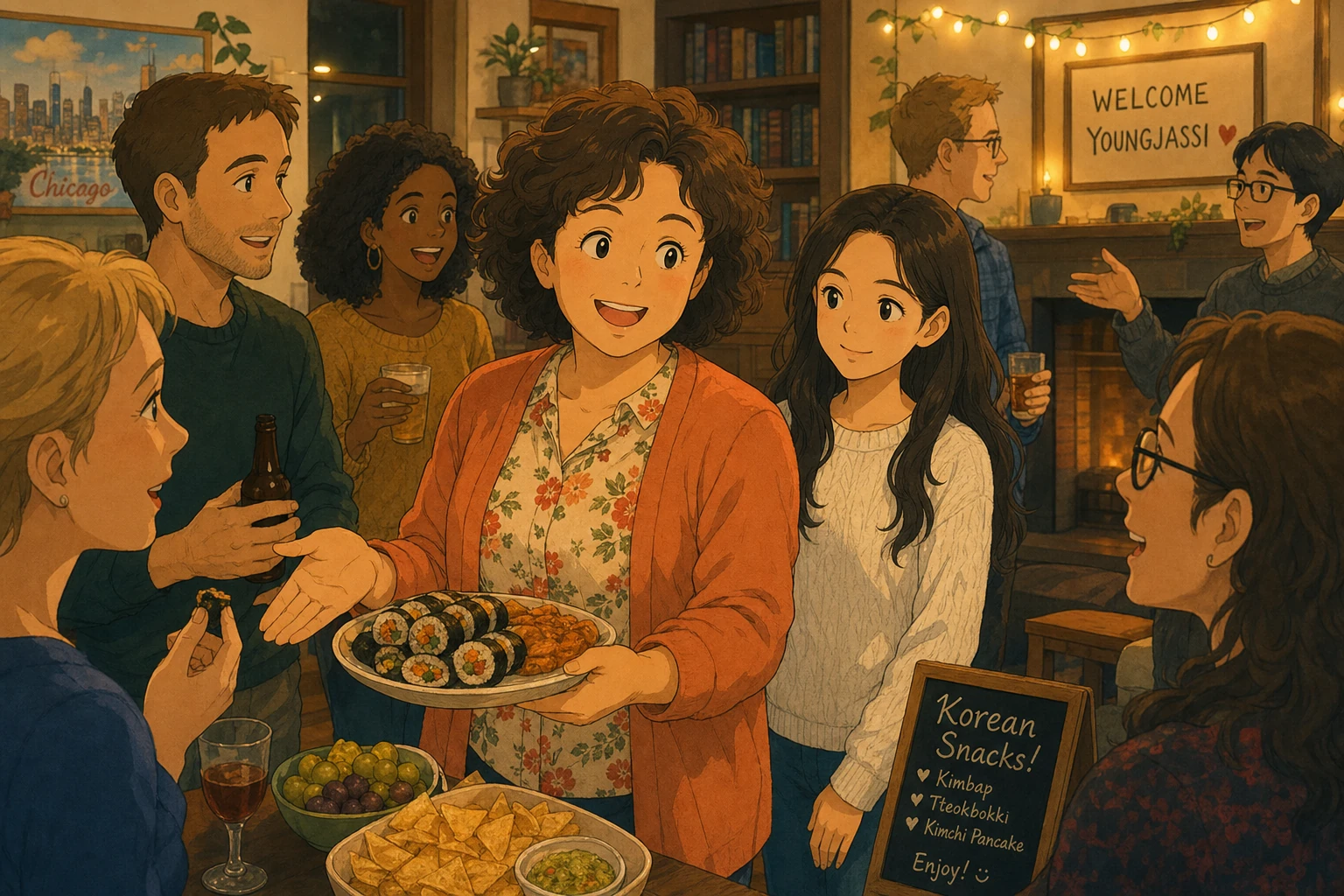
Linda invites Young-ja for a casual Saturday dinner.
Young-ja makes two large kimchi pancakes to bring — she can't arrive empty-handed.
Before going, she remembers what her daughter told her:
"Americans say 'You didn't have to' when you bring a gift — it means thank you, not a complaint!"
At the door, Young-ja holds out the kimchi jeon.
Linda's face lights up. "You didn't have to! Oh — but it smells amazing."
Young-ja relaxes. Her daughter was right.
Over dinner — Linda's pasta and Young-ja's pancake — conversation flows naturally.
Linda takes one bite of the kimchi jeon. Her eyes go wide.
"Young-ja. What IS this?"
"Kimchi pancake. Just kimchi, flour, egg, and green onion."
"This is not 'just' anything. This is extraordinary."
They talk for two full hours — entirely in English.
Young-ja walks home thinking:
"Kimchi jeon is my best diplomatic tool."
The invitation had said "nothing fancy," which Young-ja understood to mean
that the bar was low but the effort still mattered.
She made two large kimchi jeon — thicker than usual, golden on both sides,
the kind her mother used to make on rainy days.
She wrapped them carefully in foil.
Before leaving, she consulted her daughter by phone.
"What do I say? What do they say?"
"When you hand someone a gift in America, they'll probably say
'You didn't have to!' — which sounds negative but is actually just a warm way of saying
'this is too kind of you, thank you.'"
Young-ja filed this away carefully.
Linda opened the door before she'd even knocked — she must have heard the elevator.
"Young-ja! Come in, come in."
Young-ja held out the foil-wrapped package.
"I brought something. Korean pancake — kimchi jeon."
Linda unwrapped one corner and the smell hit the hallway immediately.
"You didn't have to—" She stopped. Inhaled. "Oh. Oh, that's extraordinary."
"My daughter told me you would say that."
"That I said 'you didn't have to'?"
"Yes. She said it means thank you."
Linda laughed. "She's right. It absolutely does."
Young-ja stepped inside.
The table was set simply — pasta, salad, bread, wine for Linda and water for Young-ja.
Young-ja arranged the kimchi jeon on the plate Linda offered.
They sat down.
Linda served the pasta. Young-ja passed the kimchi jeon.
Linda took a piece.
She chewed once. Then again.
Then she set her fork down and looked at Young-ja with full attention.
"Young-ja. What did you put in this?"
"Kimchi. Flour. Egg. Green onion. Sesame oil, a little."
"That's it?"
"That's it."
"This is the most flavorful thing I have eaten in recent memory.
This is not 'simple ingredients.' This is thirty years of knowing what to do with them. "
Young-ja accepted this with a small bow.
"My mother made it this way. Her mother too."
They talked through the pasta, through the kimchi jeon,
through two cups of tea and the long comfortable settling of a good evening.
Korean food. American food. Daughters. Husbands. Seasons. Languages.
At ten o'clock Young-ja stood to go.
"This was a wonderful evening, Linda."
"Same time next month?" Linda said.
"Yes. I'll bring something different."
"I can't wait."
Walking home through the quiet street, Young-ja thought about the word "unofficial."
Unofficial student of English. Unofficial American resident.
Unofficial regular at the park bench.
And tonight — unofficial but certain — unofficial friend of Linda's.
Some things didn't need paperwork to be real.
Linda invites Young-ja for dinner.
Young-ja makes kimchi jeon to bring.
Linda opens the door and sees the food.
"You didn't have to! But it smells incredible!"
Young-ja remembers: "You didn't have to" means "thank you" in America.
They eat Linda's pasta and Young-ja's kimchi pancake.
Linda eats one piece. "What is this?! This is incredible!"
Young-ja explains: "Kimchi, flour, egg, green onion. Very simple."
Linda says, "This is not simple. This is art!"
They talk for two hours. All in English.
Young-ja walks home happy. "Kimchi jeon — the best friendship food."
Linda invites Young-ja for a casual Saturday dinner.
Young-ja makes two large kimchi pancakes to bring — she can't arrive empty-handed.
Before going, she remembers what her daughter told her:
"Americans say 'You didn't have to' when you bring a gift — it means thank you, not a complaint!"
At the door, Young-ja holds out the kimchi jeon.
Linda's face lights up. "You didn't have to! Oh — but it smells amazing."
Young-ja relaxes. Her daughter was right.
Over dinner — Linda's pasta and Young-ja's pancake — conversation flows naturally.
Linda takes one bite of the kimchi jeon. Her eyes go wide.
"Young-ja. What IS this?"
"Kimchi pancake. Just kimchi, flour, egg, and green onion."
"This is not 'just' anything. This is extraordinary."
They talk for two full hours — entirely in English.
Young-ja walks home thinking:
"Kimchi jeon is my best diplomatic tool."
The invitation had said "nothing fancy," which Young-ja understood to mean
that the bar was low but the effort still mattered.
She made two large kimchi jeon — thicker than usual, golden on both sides,
the kind her mother used to make on rainy days.
She wrapped them carefully in foil.
Before leaving, she consulted her daughter by phone.
"What do I say? What do they say?"
"When you hand someone a gift in America, they'll probably say
'You didn't have to!' — which sounds negative but is actually just a warm way of saying
'this is too kind of you, thank you.'"
Young-ja filed this away carefully.
Linda opened the door before she'd even knocked — she must have heard the elevator.
"Young-ja! Come in, come in."
Young-ja held out the foil-wrapped package.
"I brought something. Korean pancake — kimchi jeon."
Linda unwrapped one corner and the smell hit the hallway immediately.
"You didn't have to—" She stopped. Inhaled. "Oh. Oh, that's extraordinary."
"My daughter told me you would say that."
"That I said 'you didn't have to'?"
"Yes. She said it means thank you."
Linda laughed. "She's right. It absolutely does."
Young-ja stepped inside.
The table was set simply — pasta, salad, bread, wine for Linda and water for Young-ja.
Young-ja arranged the kimchi jeon on the plate Linda offered.
They sat down.
Linda served the pasta. Young-ja passed the kimchi jeon.
Linda took a piece.
She chewed once. Then again.
Then she set her fork down and looked at Young-ja with full attention.
"Young-ja. What did you put in this?"
"Kimchi. Flour. Egg. Green onion. Sesame oil, a little."
"That's it?"
"That's it."
"This is the most flavorful thing I have eaten in recent memory.
This is not 'simple ingredients.' This is thirty years of knowing what to do with them. "
Young-ja accepted this with a small bow.
"My mother made it this way. Her mother too."
They talked through the pasta, through the kimchi jeon,
through two cups of tea and the long comfortable settling of a good evening.
Korean food. American food. Daughters. Husbands. Seasons. Languages.
At ten o'clock Young-ja stood to go.
"This was a wonderful evening, Linda."
"Same time next month?" Linda said.
"Yes. I'll bring something different."
"I can't wait."
Walking home through the quiet street, Young-ja thought about the word "unofficial."
Unofficial student of English. Unofficial American resident.
Unofficial regular at the park bench.
And tonight — unofficial but certain — unofficial friend of Linda's.
Some things didn't need paperwork to be real.
"이런 걸 가져오시다니! 하지만 냄새가 정말 좋은데요!"를 영어로 만들어보세요!
왼쪽 영어를 클릭 → 오른쪽 한국어를 클릭!
왼쪽엔 오늘 수업, 오른쪽엔 ChatGPT가 열립니다.