
오늘의 핵심 표현을 완성해 보세요!
단어를 탭해서 올바른 문장을 만들어 보세요!
딸은 며칠 동안 영자를 걱정했어요. 어깨가 아프다고 하셨는데 병원은 안 가시겠다는 거예요.
결국 영자는 용기를 내어 미국 병원 예약을 하고 진료받으러 갔습니다. 접수대에 도착하자 직원이 물었어요.
영자는 '인슈어런스? 보험 말하는구나!' 하며 당당하게 답했어요.
순간 영자도 자기 말이 이상하다는 걸 느꼈어요. 직원은 살짝 웃음을 참으며 "Your insurance card, please?" 하고 카드를 받아 갔습니다. 영자는 쑥스러운 듯 미소를 지었어요.
조금 기다린 뒤, 간호사가 영자를 진료실로 안내했어요. 의사 선생님은 친절한 얼굴로 인사했습니다.
영자는 "Nice to meet you!" 하고 수줍게 대답했어요.
의사가 부드러운 목소리로 물었어요.
영자는 잠시 망설였어요. '영어로 어깨가 뭐였더라…' 그러다 손가락으로 직접 어깨를 가리키며 짧게 말했습니다.
의사는 고개를 끄덕이며 진료를 시작했어요. 영자의 어깨를 가볍게 눌러보고, 몇 가지 동작을 시켜봤어요.
영자는 "Yes, here!" "A little!" 하며 간단하게 답했어요. 단어는 짧아도 의사는 다 알아들었습니다.
진료가 끝나고 의사는 처방전을 주며 말했어요. "Take this medicine twice a day. Feel better soon!"
영자는 "Thank you so much, doctor!" 하며 고개를 꾸벅 숙였어요.
진료실을 나오며 영자는 속으로 뿌듯했어요. '손짓 하나로도 병원 진료 받을 수 있구나. 영어 완벽하지 않아도 괜찮아!' 🩺
Young-ja has a sore shoulder.
Her daughter tells her to go to the doctor.
She goes to a clinic.
At the desk, they ask for her insurance.
She sees the doctor.
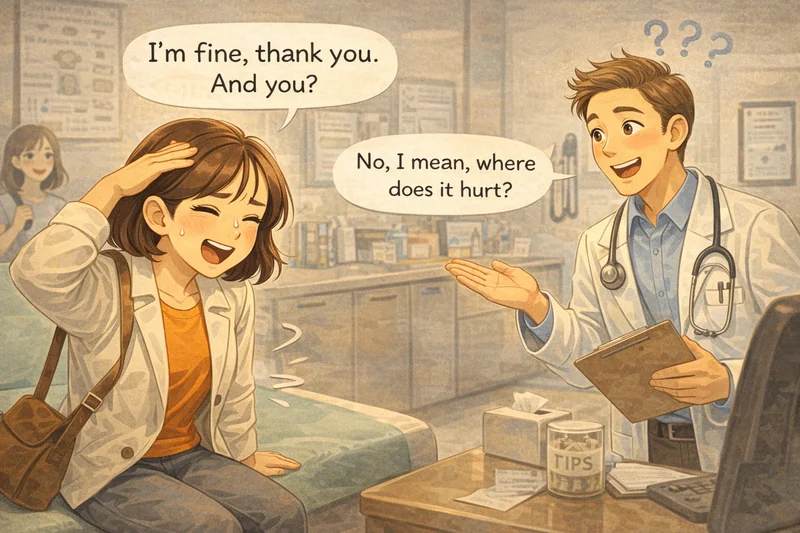
The doctor asks, "Where does it hurt?"
Young-ja points to her shoulder.
"Here!" she says.
The doctor checks her shoulder.
He gives her medicine. She feels better.
Young-ja has a sore shoulder for a few days.
Her daughter keeps telling her, "Mom, go see a doctor!"
Finally, Young-ja makes an appointment and goes to the clinic.
At the front desk, they ask, "Do you have insurance?"
Young-ja hands them her insurance card.
Soon, a nurse takes her to the doctor's room.
The doctor is very friendly. "Where does it hurt?" he asks.
Young-ja points to her shoulder. "Here! My shoulder!"
The doctor gently checks it and asks questions.
"Take this medicine twice a day. Feel better soon!"
Young-ja thanks him and leaves the clinic feeling relieved.
For several days, Young-ja's shoulder has been aching, but she kept putting off going to the doctor.
Finally, her daughter insists firmly: "Mom, if you're hurting, you have to see a doctor. This isn't Korea!"
So Young-ja gathers her courage and makes an appointment at a local clinic.
At the front desk, the receptionist asks politely, "Do you have insurance?"
Young-ja understands the word and hands over her card with a smile.
A few minutes later, a friendly nurse leads her into an examination room.
The doctor, a kind man named Dr. Smith, greets her warmly. "Hi, Young-ja. Nice to meet you."
After a brief introduction, he looks at her gently and asks, "So, where does it hurt?"
Young-ja pauses — she doesn't remember the English word for shoulder at that moment.
So she simply points to her right shoulder and says, "Here! My shoulder!"
The doctor nods and begins his examination, pressing softly and asking her to move her arm.
"Does it hurt here? How about this?" Young-ja answers with short, clear words: "Yes, here!" "A little!"
The doctor writes a prescription and explains, "Take this medicine twice a day. Feel better soon!"
Walking out of the clinic, Young-ja feels a surge of pride — she realized she doesn't need perfect English to get help, just a little courage and a pointing finger.
Young-ja has a sore shoulder.
Her daughter tells her to go to the doctor.
She goes to a clinic.
At the desk, they ask for her insurance.
She sees the doctor.
The doctor asks, "Where does it hurt?"
Young-ja points to her shoulder.
"Here!" she says.
The doctor checks her shoulder.
He gives her medicine. She feels better.
Young-ja has a sore shoulder for a few days.
Her daughter keeps telling her, "Mom, go see a doctor!"
Finally, Young-ja makes an appointment and goes to the clinic.
At the front desk, they ask, "Do you have insurance?"
Young-ja hands them her insurance card.
Soon, a nurse takes her to the doctor's room.
The doctor is very friendly. "Where does it hurt?" he asks.
Young-ja points to her shoulder. "Here! My shoulder!"
The doctor gently checks it and asks questions.
"Take this medicine twice a day. Feel better soon!"
Young-ja thanks him and leaves the clinic feeling relieved.
For several days, Young-ja's shoulder has been aching, but she kept putting off going to the doctor.
Finally, her daughter insists firmly: "Mom, if you're hurting, you have to see a doctor. This isn't Korea!"
So Young-ja gathers her courage and makes an appointment at a local clinic.
At the front desk, the receptionist asks politely, "Do you have insurance?"
Young-ja understands the word and hands over her card with a smile.
A few minutes later, a friendly nurse leads her into an examination room.
The doctor, a kind man named Dr. Smith, greets her warmly. "Hi, Young-ja. Nice to meet you."
After a brief introduction, he looks at her gently and asks, "So, where does it hurt?"
Young-ja pauses — she doesn't remember the English word for shoulder at that moment.
So she simply points to her right shoulder and says, "Here! My shoulder!"
The doctor nods and begins his examination, pressing softly and asking her to move her arm.
"Does it hurt here? How about this?" Young-ja answers with short, clear words: "Yes, here!" "A little!"
The doctor writes a prescription and explains, "Take this medicine twice a day. Feel better soon!"
Walking out of the clinic, Young-ja feels a surge of pride — she realized she doesn't need perfect English to get help, just a little courage and a pointing finger.
"어디가 아프세요?"를 영어로 만들어보세요!
왼쪽 영어를 클릭 → 오른쪽 한국어를 클릭!
왼쪽엔 오늘 수업, 오른쪽엔 ChatGPT가 열립니다.