
오늘의 핵심 표현을 완성해 보세요!
단어를 탭해서 올바른 문장을 만들어 보세요!
박영자는 며칠 전, 딸의 추천으로 미국 세탁소에 드라이클리닝을 맡겼어요.
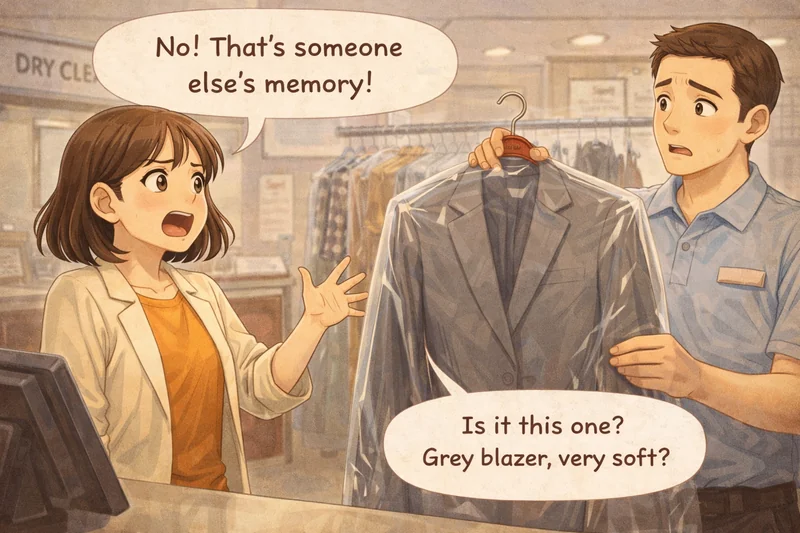
영자는 자신 있게 갈색 정장을 들고 세탁소에 갔어요. 직원에게 열심히 설명했습니다.
직원은 고개를 끄덕이며 영수증을 주었어요. 며칠 뒤, 영자는 옷을 찾으러 세탁소에 갔습니다.
직원이 카운터에서 물었어요.
영자는 또박또박 대답했어요. "Kim Young-ja."
직원은 컴퓨터에서 이름을 검색하고 선반을 뒤적거렸어요. 그런데... 찾을 수가 없었어요!
영자는 당황했어요. '내 옷이 없어졌다고?' 심장이 쿵 내려앉았습니다. 하지만 포기할 순 없었어요.
영자는 심호흡을 하고 영수증을 꺼내며 또박또박 말했어요.
직원이 영수증을 받아들고 다시 찾기 시작했어요. 이번엔 좀 더 꼼꼼히 뒤적였죠. 잠시 후, 그의 얼굴이 환해졌어요.
영자는 가슴을 쓸어내렸어요. 알고 보니 이름 스펠링이 조금 달라서 다른 선반에 있었던 거예요! 한국어 이름을 영어로 옮길 때 표기가 달라질 수 있거든요.
직원이 갈색 정장을 찾아와 보여줬어요. 완벽하게 깨끗하게 드라이클리닝 돼 있었죠!
영자는 옷을 받아들며 "Thank you so much!" 하고 환하게 웃었어요. 직원도 미소로 답했습니다.
집에 돌아온 영자는 딸에게 자랑스럽게 이야기했어요. "엄마가 영어로 영수증 보여주면서 해결했어요!"
딸은 박수를 치며 대답했어요. "엄마, 완전 멋있어요!" 👔
Young-ja goes to a dry cleaner.
She leaves her brown suit there.
A few days later, she comes back.
"Name, please?" the worker says.
"Kim Young-ja," she answers.
The worker looks but cannot find it.
Young-ja shows her receipt.
"I dropped off my clothes last week!"
The worker checks again and finds it!
Young-ja is very happy.
A few days ago, Young-ja took her brown suit to a dry cleaner.
"Two-piece suit, brown, very soft," she told the worker.
Today, she goes back to pick it up.
The worker asks, "Name, please?"
"Kim Young-ja," she says clearly.
But the worker cannot find her suit!
"I'm sorry, nothing under that name."
Young-ja is worried, but she shows her receipt.
"I dropped off my clothes last week. Here is the receipt."
The worker checks again and finds her suit — under a different spelling.
"Sorry for the confusion!" he says. Young-ja smiles, relieved.
A few days ago, Young-ja decided to try the neighborhood dry cleaner for the first time, as her daughter had recommended.
She carried her favorite brown two-piece suit and confidently explained to the worker: "Two-piece suit, brown, very soft!"
The worker nodded, wrote a receipt, and Young-ja left the shop feeling proud of her American errand.
A week later, she returned to pick up her clean suit.
"Name, please?" the worker at the counter asked.
"Kim Young-ja," she answered clearly.
The worker typed into the computer and checked the racks, but his face grew puzzled.
"I'm sorry, I don't see anything under that name."
Young-ja's heart sank. Was her suit lost? But she refused to panic.
Taking a deep breath, she pulled out her receipt and said calmly, "I dropped off my clothes last week. Here is my receipt."
The worker took the receipt and searched more carefully this time. Suddenly his eyes lit up.
"Oh! Here it is! It was under 'Yong-ja Kim' — different spelling!" Korean names can be romanized in slightly different ways, and that had caused the mix-up.
Young-ja laughed softly in relief as the worker brought out her perfectly cleaned brown suit.
Walking home with her suit on a hanger, she felt proud — she had faced a scary moment and solved it on her own using one courageous English sentence.
Young-ja goes to a dry cleaner.
She leaves her brown suit there.
A few days later, she comes back.
"Name, please?" the worker says.
"Kim Young-ja," she answers.
The worker looks but cannot find it.
Young-ja shows her receipt.
"I dropped off my clothes last week!"
The worker checks again and finds it!
Young-ja is very happy.
A few days ago, Young-ja took her brown suit to a dry cleaner.
"Two-piece suit, brown, very soft," she told the worker.
Today, she goes back to pick it up.
The worker asks, "Name, please?"
"Kim Young-ja," she says clearly.
But the worker cannot find her suit!
"I'm sorry, nothing under that name."
Young-ja is worried, but she shows her receipt.
"I dropped off my clothes last week. Here is the receipt."
The worker checks again and finds her suit — under a different spelling.
"Sorry for the confusion!" he says. Young-ja smiles, relieved.
A few days ago, Young-ja decided to try the neighborhood dry cleaner for the first time, as her daughter had recommended.
She carried her favorite brown two-piece suit and confidently explained to the worker: "Two-piece suit, brown, very soft!"
The worker nodded, wrote a receipt, and Young-ja left the shop feeling proud of her American errand.
A week later, she returned to pick up her clean suit.
"Name, please?" the worker at the counter asked.
"Kim Young-ja," she answered clearly.
The worker typed into the computer and checked the racks, but his face grew puzzled.
"I'm sorry, I don't see anything under that name."
Young-ja's heart sank. Was her suit lost? But she refused to panic.
Taking a deep breath, she pulled out her receipt and said calmly, "I dropped off my clothes last week. Here is my receipt."
The worker took the receipt and searched more carefully this time. Suddenly his eyes lit up.
"Oh! Here it is! It was under 'Yong-ja Kim' — different spelling!" Korean names can be romanized in slightly different ways, and that had caused the mix-up.
Young-ja laughed softly in relief as the worker brought out her perfectly cleaned brown suit.
Walking home with her suit on a hanger, she felt proud — she had faced a scary moment and solved it on her own using one courageous English sentence.
"지난주에 옷을 맡겼어요."를 영어로 만들어보세요!
왼쪽 영어를 클릭 → 오른쪽 한국어를 클릭!
왼쪽엔 오늘 수업, 오른쪽엔 ChatGPT가 열립니다.