
오늘의 핵심 표현을 완성해 보세요!
단어를 탭해서 올바른 문장을 만들어 보세요!
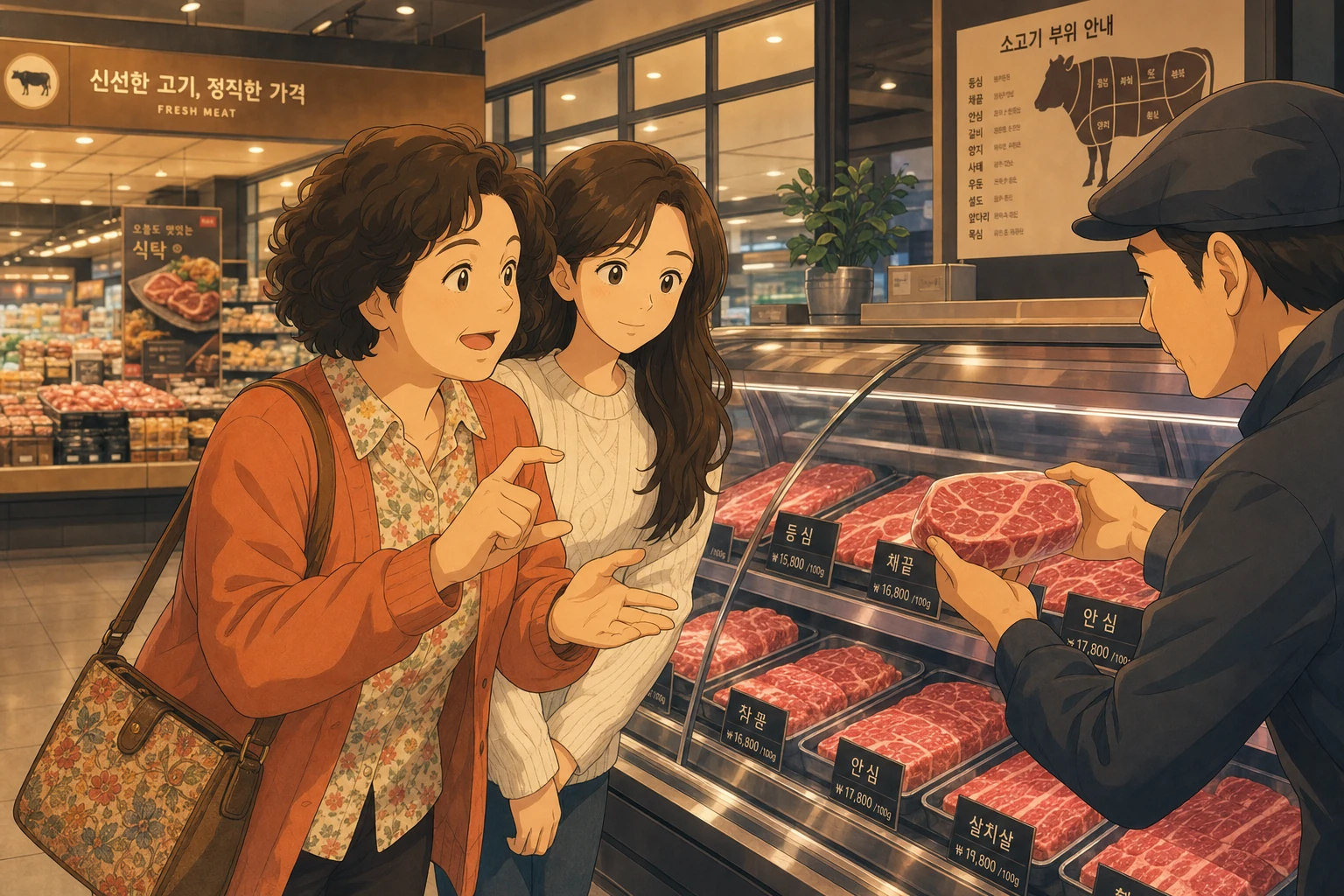
영자는 불고기를 만들고 싶었습니다.
마트 정육 코너 앞에 섰습니다.
소고기가 종류별로 있었는데, 이름이 다 낯설었습니다.
ribeye, sirloin, chuck, brisket, flank...
한국에서라면 "불고기용으로 얇게 썰어주세요" 한 마디면 됐는데.
직원이 말했습니다.
영자가 말했습니다.
직원이 물었습니다.
Sirloin is leaner. "
영자가 당황했습니다. Marbled? Leaner?
직원이 고개를 끄덕이며 말했습니다.
직원이 고기를 꺼내려 하자 영자가 말했습니다.
직원이 웃으며 말했습니다.
기계 소리가 났습니다.
잠시 후 얇게 썰린 소고기가 포장돼서 나왔습니다.
영자가 눈이 반짝였습니다.
집에 와서 양념을 했습니다.
불고기를 구웠습니다.
딸이 먹으며 말했습니다.
영자가 웃으며 말했습니다.
Young-ja wants to make bulgogi.
She goes to the meat counter.
She says, "I want beef. Very thin slices."
The worker asks, "Ribeye or sirloin?"
Young-ja says, "Soft beef. A little fat."
The worker says, "Ribeye is good!"
Young-ja says, "One pound, please."
Then she says, "Can you slice it thin? Like paper."
The worker slices it with a machine.
Young-ja cooks bulgogi at home.
Her daughter says, "It tastes exactly like Korean bulgogi!"
Young-ja wants to make Korean bulgogi.
She goes to the meat counter but doesn't know the beef names.
She tells the worker, "I want beef for Korean BBQ. Very thin slices. Soft. A little fat."
The worker recommends ribeye — it's tender with good marbling, perfect for thin slices.
Young-ja orders one pound of ribeye.
Then she adds, "Can you slice it thin, please? Like paper."
"Like paper — got it!" the worker says with a smile.
The machine slices it perfectly.
Young-ja is amazed. "Oh! Perfect!"
At home, she marinates the beef and cooks it.
Her daughter takes one bite and says, "Mom, this tastes exactly like Korean bulgogi!"
Young-ja smiles. "Good meat is good meat in any country."
Young-ja stood in front of the meat counter and felt immediately out of her depth.
Back in Korea, she could describe exactly what she needed in ten words.
Here, the labels read like a foreign language within a foreign language:
ribeye, sirloin, chuck, brisket, flank steak, short rib.
The butcher appeared — friendly, patient, wearing a white apron.
"Hi there! What can I help you with today?"
Young-ja decided the best approach was honesty.
"I want to make Korean bulgogi. I need beef — very tender, a little fat, sliced very thin."
The butcher's expression cleared immediately. He knew what she meant.
"Korean BBQ — excellent. For that, you want either ribeye or sirloin.
Ribeye has more marbling — that means fat running through the meat — so it's richer and more tender.
Sirloin is leaner, a bit firmer. "
Young-ja thought about the bulgogi her mother used to make.
Tender. A little sweet from the fat. Practically melted in your mouth.
"Ribeye," she said. "One pound, please."
As the butcher reached for the meat, she quickly added:
"Can you slice it thin, please? Very thin — like paper, almost."
He looked up with a grin. "Like paper — absolutely. I'll put it through the electric slicer."
The machine whirred. Pale, translucent slices of ribeye came out the other side,
almost exactly like the pre-sliced bulgogi meat she used to buy in Korea.
Young-ja clasped her hands together.
"Oh! That is perfect. Exactly right."
That evening, she made the marinade from memory — soy sauce, Asian pear, garlic, sesame oil, sugar.
She laid the thin slices in and let them soak.
Then she cooked them in a hot pan, watching the edges curl and caramelize.
Her daughter came into the kitchen, drawn by the smell.
She took one piece straight from the pan.
"Mom. This is exactly — exactly — like home."
Young-ja smiled quietly and turned back to the stove.
"고기는 고기야. 얇게만 썰면 돼."
Meat is meat. You just have to know how to ask.
Young-ja wants to make bulgogi.
She goes to the meat counter.
She says, "I want beef. Very thin slices."
The worker asks, "Ribeye or sirloin?"
Young-ja says, "Soft beef. A little fat."
The worker says, "Ribeye is good!"
Young-ja says, "One pound, please."
Then she says, "Can you slice it thin? Like paper."
The worker slices it with a machine.
Young-ja cooks bulgogi at home.
Her daughter says, "It tastes exactly like Korean bulgogi!"
Young-ja wants to make Korean bulgogi.
She goes to the meat counter but doesn't know the beef names.
She tells the worker, "I want beef for Korean BBQ. Very thin slices. Soft. A little fat."
The worker recommends ribeye — it's tender with good marbling, perfect for thin slices.
Young-ja orders one pound of ribeye.
Then she adds, "Can you slice it thin, please? Like paper."
"Like paper — got it!" the worker says with a smile.
The machine slices it perfectly.
Young-ja is amazed. "Oh! Perfect!"
At home, she marinates the beef and cooks it.
Her daughter takes one bite and says, "Mom, this tastes exactly like Korean bulgogi!"
Young-ja smiles. "Good meat is good meat in any country."
Young-ja stood in front of the meat counter and felt immediately out of her depth.
Back in Korea, she could describe exactly what she needed in ten words.
Here, the labels read like a foreign language within a foreign language:
ribeye, sirloin, chuck, brisket, flank steak, short rib.
The butcher appeared — friendly, patient, wearing a white apron.
"Hi there! What can I help you with today?"
Young-ja decided the best approach was honesty.
"I want to make Korean bulgogi. I need beef — very tender, a little fat, sliced very thin."
The butcher's expression cleared immediately. He knew what she meant.
"Korean BBQ — excellent. For that, you want either ribeye or sirloin.
Ribeye has more marbling — that means fat running through the meat — so it's richer and more tender.
Sirloin is leaner, a bit firmer. "
Young-ja thought about the bulgogi her mother used to make.
Tender. A little sweet from the fat. Practically melted in your mouth.
"Ribeye," she said. "One pound, please."
As the butcher reached for the meat, she quickly added:
"Can you slice it thin, please? Very thin — like paper, almost."
He looked up with a grin. "Like paper — absolutely. I'll put it through the electric slicer."
The machine whirred. Pale, translucent slices of ribeye came out the other side,
almost exactly like the pre-sliced bulgogi meat she used to buy in Korea.
Young-ja clasped her hands together.
"Oh! That is perfect. Exactly right."
That evening, she made the marinade from memory — soy sauce, Asian pear, garlic, sesame oil, sugar.
She laid the thin slices in and let them soak.
Then she cooked them in a hot pan, watching the edges curl and caramelize.
Her daughter came into the kitchen, drawn by the smell.
She took one piece straight from the pan.
"Mom. This is exactly — exactly — like home."
Young-ja smiled quietly and turned back to the stove.
"고기는 고기야. 얇게만 썰면 돼."
Meat is meat. You just have to know how to ask.
"얇게 썰어 주실 수 있나요?"를 영어로 만들어보세요!
왼쪽 영어를 클릭 → 오른쪽 한국어를 클릭!
왼쪽엔 오늘 수업, 오른쪽엔 ChatGPT가 열립니다.