
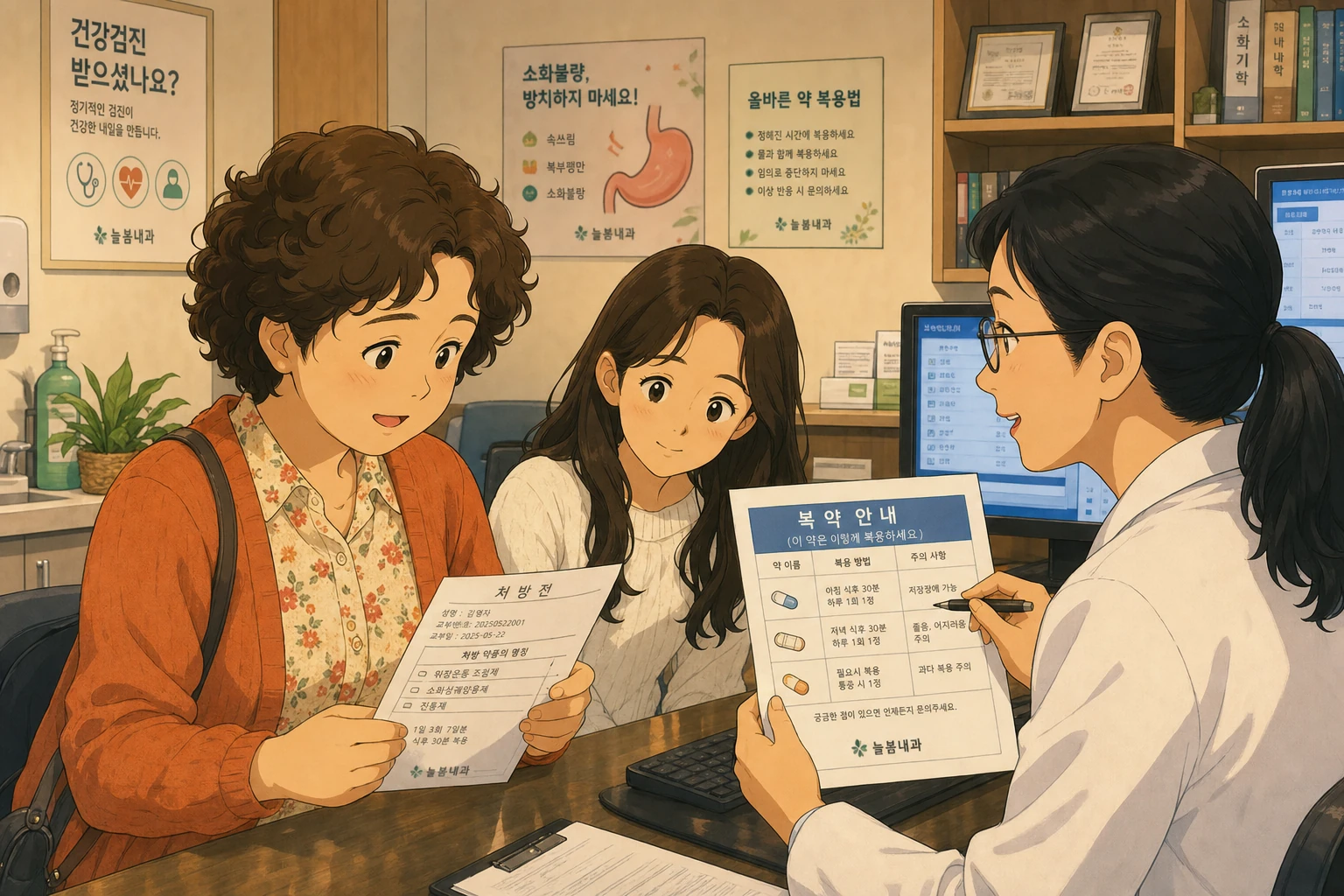
오늘의 핵심 표현을 완성해 보세요!
단어를 탭해서 올바른 문장을 만들어 보세요!
영자가 감기가 심해서 병원에 갔습니다.
처음엔 딸이 함께 가려고 했는데 회사 일이 생겼습니다.
영자가 혼자 갔습니다.
접수대에서 말했습니다.
대기실에서 기다리다가 간호사가 불렀습니다.
의사 Dr. Patel이 들어왔습니다.
영자가 말했습니다.
Sore throat. Cough. Little fever. "
Dr. Patel이 진찰했습니다.
목을 보고, 귀를 보고, 청진기로 들었습니다.
I'm going to prescribe antibiotics. "
영자가 말했습니다.
Dr. Patel이 말했습니다.
The antibiotics will clear it up in a few days. "
영자가 중요한 것을 물었습니다.
Dr. Patel이 말했습니다.
With food if possible. And this is very important:
finish all of the medication even if you feel better before it's done. "
영자가 고개를 끄덕이며 말했습니다.
영자가 메모했습니다.
Dr. Patel이 웃으며 말했습니다.
약국에서 처방전을 건네며 말했습니다.
약사가 약을 준비해줬습니다.
약 봉투에 스티커가 붙어 있었습니다.
영자가 스티커를 읽으며 웃었습니다.
집에 와서 노트에 썼습니다.
Finish all = 끝까지 먹기
Even if better = 나아도 계속
이 세 가지가 처방전의 핵심이다. "
Young-ja goes to the doctor alone.
She says, "I have a bad cold. Sore throat, cough, little fever."
The doctor checks her throat and chest.
"I will give you antibiotics."
Young-ja asks, "How do I take them?"
"Take one pill twice a day. With food. And finish all of it."
Young-ja asks, "Even if I feel better?"
"Yes! Very important."
Young-ja notes: "Twice a day. With food. Finish all."
At the pharmacy she gets the medicine.
The label says: "Take 1 capsule twice daily with food for 10 days."
Young-ja smiles. "Same as the doctor said. Good."
Young-ja goes to the doctor alone with a bad cold — three days of sore throat, cough, and fever.
Dr. Patel examines her and says she has a bacterial infection, not just a virus.
He prescribes antibiotics.
Young-ja asks how to take them.
"Take one pill twice a day — morning and evening — with food.
And this is very important: finish all the medication even if you feel better. "
Young-ja confirms: "Even if I feel better — I still take the pills?"
"Yes. Stopping early can make the infection come back stronger."
Young-ja writes in her notebook: "Twice a day. With food. Finish all. Even if better."
At the pharmacy, the label on the bottle says exactly the same thing.
Young-ja smiles. "The doctor and the label agree. Good."
She goes home and takes the first pill with dinner.
Three days later she feels much better.
She takes the pill anyway — because she remembers: finish all of it.
Young-ja had been putting off the doctor for two days,
reasoning that a cold was a cold and it would pass.
On day three, when swallowing became something she had to think about,
she called the clinic.
Her daughter had offered to come. Young-ja had said no.
"I need to be able to do this. Let me try."
At the reception desk she said calmly:
"I have an appointment. Young-ja Kim. Two o'clock."
The nurse led her back.
Dr. Patel came in — young, efficient, with the kind of careful attention
that made patients feel immediately less worried.
"What brings you in today, Young-ja?"
"Three days of sore throat. Getting worse, not better.
Some coughing. Low fever — thirty-seven point eight. "
She had converted from Celsius before leaving the house.
Dr. Patel looked at her throat, checked her ears, listened to her chest.
"Your throat is significantly inflamed, and there's some congestion in your lower chest.
This looks bacterial rather than viral. I'd like to start you on antibiotics. "
"Is that serious?"
"Not at all — but important to treat properly.
You should feel meaningfully better within forty-eight hours. "
"How do I take them?"
Dr. Patel pulled up a chair — a small gesture Young-ja noted and appreciated.
"One pill, twice a day. Morning and evening, ideally with food —
it'll be easier on your stomach.
The course is ten days. And this is the part people often get wrong:
you must finish all ten days even if you feel completely better after four or five. "
Young-ja nodded. "If I stop early?"
"The bacteria that survive the early doses are the toughest ones.
Stop early and they come back — and they're harder to treat the second time. "
Young-ja wrote in the small notebook she'd started carrying to medical appointments.
Twice a day. With food. Ten days. Finish all. Non-negotiable.
"Any questions?"
"No. I understand everything."
Dr. Patel smiled. "I wish all my patients listened this carefully."
At the pharmacy, the label confirmed everything:
"Take 1 capsule by mouth TWICE DAILY with food for 10 days.
Complete the full course even if symptoms improve. "
Young-ja put the bottle in her bag and took the first capsule that evening with dinner.
Three days later she felt almost normal.
She took the capsule anyway — because the doctor had been clear,
and because she had written it down, and because finish all of it
was the kind of instruction that didn't have exceptions.
나아도 계속.
Even if better — finish all.
Some rules are simple because they matter.
Young-ja goes to the doctor alone.
She says, "I have a bad cold. Sore throat, cough, little fever."
The doctor checks her throat and chest.
"I will give you antibiotics."
Young-ja asks, "How do I take them?"
"Take one pill twice a day. With food. And finish all of it."
Young-ja asks, "Even if I feel better?"
"Yes! Very important."
Young-ja notes: "Twice a day. With food. Finish all."
At the pharmacy she gets the medicine.
The label says: "Take 1 capsule twice daily with food for 10 days."
Young-ja smiles. "Same as the doctor said. Good."
Young-ja goes to the doctor alone with a bad cold — three days of sore throat, cough, and fever.
Dr. Patel examines her and says she has a bacterial infection, not just a virus.
He prescribes antibiotics.
Young-ja asks how to take them.
"Take one pill twice a day — morning and evening — with food.
And this is very important: finish all the medication even if you feel better. "
Young-ja confirms: "Even if I feel better — I still take the pills?"
"Yes. Stopping early can make the infection come back stronger."
Young-ja writes in her notebook: "Twice a day. With food. Finish all. Even if better."
At the pharmacy, the label on the bottle says exactly the same thing.
Young-ja smiles. "The doctor and the label agree. Good."
She goes home and takes the first pill with dinner.
Three days later she feels much better.
She takes the pill anyway — because she remembers: finish all of it.
Young-ja had been putting off the doctor for two days,
reasoning that a cold was a cold and it would pass.
On day three, when swallowing became something she had to think about,
she called the clinic.
Her daughter had offered to come. Young-ja had said no.
"I need to be able to do this. Let me try."
At the reception desk she said calmly:
"I have an appointment. Young-ja Kim. Two o'clock."
The nurse led her back.
Dr. Patel came in — young, efficient, with the kind of careful attention
that made patients feel immediately less worried.
"What brings you in today, Young-ja?"
"Three days of sore throat. Getting worse, not better.
Some coughing. Low fever — thirty-seven point eight. "
She had converted from Celsius before leaving the house.
Dr. Patel looked at her throat, checked her ears, listened to her chest.
"Your throat is significantly inflamed, and there's some congestion in your lower chest.
This looks bacterial rather than viral. I'd like to start you on antibiotics. "
"Is that serious?"
"Not at all — but important to treat properly.
You should feel meaningfully better within forty-eight hours. "
"How do I take them?"
Dr. Patel pulled up a chair — a small gesture Young-ja noted and appreciated.
"One pill, twice a day. Morning and evening, ideally with food —
it'll be easier on your stomach.
The course is ten days. And this is the part people often get wrong:
you must finish all ten days even if you feel completely better after four or five. "
Young-ja nodded. "If I stop early?"
"The bacteria that survive the early doses are the toughest ones.
Stop early and they come back — and they're harder to treat the second time. "
Young-ja wrote in the small notebook she'd started carrying to medical appointments.
Twice a day. With food. Ten days. Finish all. Non-negotiable.
"Any questions?"
"No. I understand everything."
Dr. Patel smiled. "I wish all my patients listened this carefully."
At the pharmacy, the label confirmed everything:
"Take 1 capsule by mouth TWICE DAILY with food for 10 days.
Complete the full course even if symptoms improve. "
Young-ja put the bottle in her bag and took the first capsule that evening with dinner.
Three days later she felt almost normal.
She took the capsule anyway — because the doctor had been clear,
and because she had written it down, and because finish all of it
was the kind of instruction that didn't have exceptions.
나아도 계속.
Even if better — finish all.
Some rules are simple because they matter.
"나아도 약을 끝까지 다 드세요."를 영어로 만들어보세요!
왼쪽 영어를 클릭 → 오른쪽 한국어를 클릭!
왼쪽엔 오늘 수업, 오른쪽엔 ChatGPT가 열립니다.