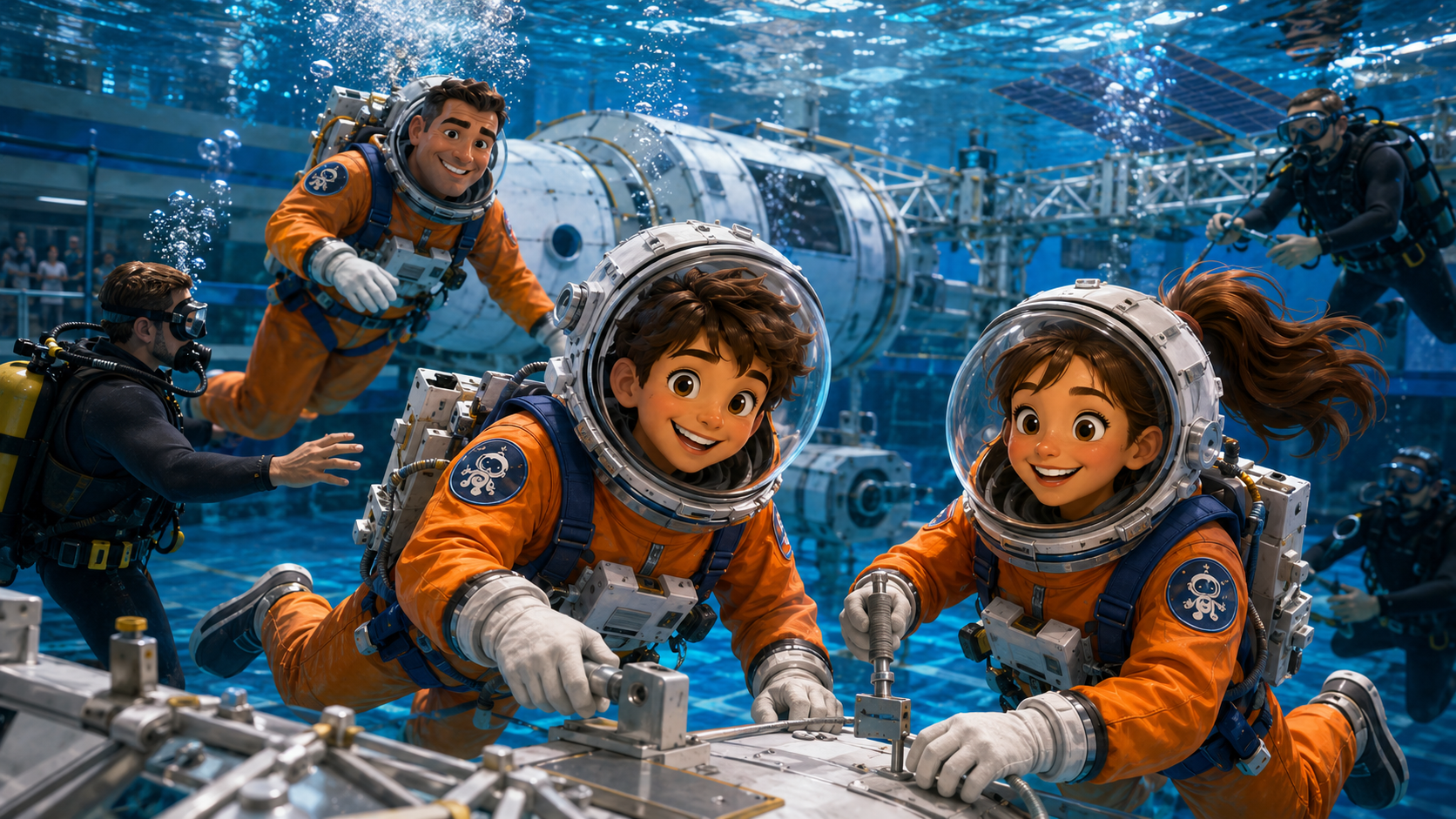
ISS Docking Training โ€” Underwater Pool
ISS APPROACH ยท WEEK 3
STEP 11 / 20 โ€” WEEK 3

ISS Docking
Training

ISS ๋„ํ‚น ํ›ˆ๋ จ

๊ตญ์ œ์šฐ์ฃผ์ •๊ฑฐ์žฅ(ISS)์€ ์ง€๊ธˆ ์ด ์ˆœ๊ฐ„ ์ง€๊ตฌ 400km ์ƒ๊ณต์„ ๋Œ๊ณ  ์žˆ์Šต๋‹ˆ๋‹ค. ์šฐ์ฃผ์„ ์„ ISS์— ์—ฐ๊ฒฐํ•˜๋Š” ๋„ํ‚น์€ ์šฐ์ฃผ์—์„œ ๊ฐ€์žฅ ์ •๋ฐ€ํ•œ ์ž‘์—… ์ค‘ ํ•˜๋‚˜์ž…๋‹ˆ๋‹ค. ์ˆ˜์ค‘ ํ›ˆ๋ จ๋ถ€ํ„ฐ ์‹ค์ „ ๋„ํ‚น๊นŒ์ง€ โ€” ์ค€๋น„๋˜์…จ๋‚˜์š”?

โ–ธ ์˜ค๋Š˜์˜ ํ•ต์‹ฌ ํ‘œํ˜„ 4๊ฐ€์ง€
01
"Docking port aligned. Approach authorized."
๋„ํ‚น ํฌํŠธ ์ •๋ ฌ๋จ. ์ ‘๊ทผ ์Šน์ธ.
02
"Speed nominal. Distance: ten meters."
์†๋„ ์ •์ƒ. ๊ฑฐ๋ฆฌ: 10๋ฏธํ„ฐ.
03
"Contact confirmed. Latches engaged."
์ ‘์ด‰ ํ™•์ธ. ์ž ๊ธˆ์žฅ์น˜ ์ฒด๊ฒฐ.
04
"Docking complete. Welcome to the ISS."
๋„ํ‚น ์™„๋ฃŒ. ISS์— ์˜ค์‹  ๊ฒƒ์„ ํ™˜์˜ํ•ฉ๋‹ˆ๋‹ค.
โ–ธ ๋„ํ‚น์˜ 3๋Œ€ ์›์น™
DOCKING RULES
๐ŸŽฏ
ALIGN
์ •๋ ฌ
๋„ํ‚น ํฌํŠธ๋ฅผ ์™„๋ฒฝํžˆ ์ •๋ ฌํ•˜์„ธ์š”. 1cm์˜ ์˜ค์ฐจ๋„ ํ—ˆ์šฉ๋˜์ง€ ์•Š์Šต๋‹ˆ๋‹ค.
๐Ÿข
GO SLOW
์ฒœ์ฒœํžˆ
์šฐ์ฃผ์—๋Š” ๋ธŒ๋ ˆ์ดํฌ๊ฐ€ ์—†์Šต๋‹ˆ๋‹ค. ์ดˆ๋‹น 0.1m ์ดํ•˜๋กœ ์ ‘๊ทผํ•˜์„ธ์š”.
๐Ÿค
TEAMWORK
ํŒ€์›Œํฌ
ํŒŒ์ผ๋Ÿฟยท๋„ค๋น„๊ฒŒ์ดํ„ฐยท๋ฏธ์…˜์ปจํŠธ๋กค์ด ํ•˜๋‚˜์˜ ํŒ€์œผ๋กœ ์›€์ง์ž…๋‹ˆ๋‹ค.
โ–ธ ์˜ค๋Š˜์˜ ํ›ˆ๋ จ ์ผ์ •
MISSION TIME 25MIN
5๋ถ„
STEP 11 VIDEO
ISS ๋„ํ‚น ์˜์ƒ ์‹œ์ฒญ โ€” ์ˆ˜์ค‘ ํ›ˆ๋ จ๊ณผ ์‹ค์ „ ๋„ํ‚น ์žฅ๋ฉด์„ ํ™•์ธํ•ฉ๋‹ˆ๋‹ค.
8๋ถ„
VOCAB + PHRASES
ํ•ต์‹ฌ ์–ดํœ˜์™€ ๋„ํ‚น ๊ต์‹  ํ‘œํ˜„ 4๊ฐ€์ง€๋ฅผ ์†Œ๋ฆฌ ๋‚ด์–ด ์—ฐ์Šตํ•ฉ๋‹ˆ๋‹ค.
7๋ถ„
READING
ํ•™๋…„๋ณ„ ๋ฆฌ๋”ฉ ์ง€๋ฌธ์„ ์ฝ๊ณ  ์ฒดํฌ ํ€ด์ฆˆ์— ๋‹ตํ•ฉ๋‹ˆ๋‹ค.
5๋ถ„
GPT MISSION
Camp A GPT์—๊ฒŒ ๋„ํ‚น ์ƒํƒœ๋ฅผ ์˜์–ด๋กœ ๋ณด๊ณ ํ•ฉ๋‹ˆ๋‹ค.
โ–ธ ํ•™๋…„๋ณ„ ์–ดํœ˜ & ํ™œ๋™
01
dock
๋„ํ‚นํ•˜๋‹ค, ์—ฐ๊ฒฐํ•˜๋‹ค
"We will dock with the ISS."
02
port
ํ•ญ๊ตฌ; ๋„ํ‚น ํฌํŠธ
"The docking port is open."
03
approach
์ ‘๊ทผํ•˜๋‹ค
"We are approaching the ISS."
04
contact
์ ‘์ด‰, ์—ฐ๊ฒฐ
"Contact! We are connected."
05
latch
์ž ๊ธˆ์žฅ์น˜
"The latches are locked."
1
STEP 11 ์˜์ƒ ์‹œ์ฒญ
โฑ 5๋ถ„
์ˆ˜์ค‘ ํ›ˆ๋ จ ์žฅ๋ฉด๊ณผ ์‹ค์ œ ๋„ํ‚น ์นด์šดํŠธ๋‹ค์šด ์žฅ๋ฉด์„ ํ™•์ธํ•ฉ๋‹ˆ๋‹ค.
2
๋„ํ‚น ๋กคํ”Œ๋ ˆ์ด
โฑ 10๋ถ„
ํŒŒ์ผ๋Ÿฟ ์—ญํ•  โ†’ "Approaching docking port. Speed slow. Contact!" ์—ฐ์Šต.
3
Camp A GPT ๊ต์‹ 
โฑ 10๋ถ„
GPT์—๊ฒŒ ๋„ํ‚น ์™„๋ฃŒ ๋ณด๊ณ  + ๊ธฐ๋ณธ ์–ดํœ˜ 5๊ฐœ ๋งํ•˜๊ธฐ.
01
docking port
๋„ํ‚น ํฌํŠธ
"Align with the docking port."
02
neutral buoyancy
์ค‘๋ฆฝ ๋ถ€๋ ฅ
"The pool creates neutral buoyancy."
03
radar
๋ ˆ์ด๋”
"Check the radar for distance."
04
alignment
์ •๋ ฌ
"Alignment is nominal."
05
precise
์ •ํ™•ํ•œ
"Docking must be very precise."
06
nominal
์ •์ƒ (ํ•ญ๊ณต์šฐ์ฃผ ์šฉ์–ด)
"All systems nominal."
1
STEP 11 ์˜์ƒ ์‹œ์ฒญ
โฑ 5๋ถ„
์ค‘๋ฆฝ๋ถ€๋ ฅ ํ›ˆ๋ จ + ์‹ค์ „ ๋„ํ‚น ์นด์šดํŠธ๋‹ค์šด ํ๋ฆ„์„ ํŒŒ์•…ํ•ฉ๋‹ˆ๋‹ค.
2
๋„ํ‚น ์‹œ๋ฎฌ๋ ˆ์ด์…˜
โฑ 10๋ถ„
ํŒŒ์ผ๋Ÿฟ/๋„ค๋น„๊ฒŒ์ดํ„ฐ ์—ญํ•  ๋ถ„๋‹ด โ†’ ๊ฑฐ๋ฆฌ ํ˜ธ์ถœ โ†’ ์ ‘์ด‰ ๋ณด๊ณ  ๋กคํ”Œ๋ ˆ์ด.
3
Camp A GPT ๊ต์‹ 
โฑ 10๋ถ„
๋„ํ‚น ์ƒํ™ฉ 3๋‹จ๊ณ„(์ ‘๊ทผ/์ •๋ ฌ/์ฒด๊ฒฐ) ์˜์–ด ๋ณด๊ณ  + ํ”ผ๋“œ๋ฐฑ.
01
rendezvous
๋ž‘๋ฐ๋ถ€ (์šฐ์ฃผ์„  ๋งŒ๋‚จ)
"Rendezvous with ISS in 2 hours."
02
translational velocity
๋ณ‘์ง„ ์†๋„
"Translational velocity: 0.08 m/s."
03
pitch / yaw / roll
ํ”ผ์น˜ / ์š” / ๋กค (ํšŒ์ „ ์ถ•)
"Yaw correction: minus two degrees."
04
soft capture
์†Œํ”„ํŠธ ์บก์ฒ˜ (์ดˆ๊ธฐ ์ ‘์ด‰)
"Soft capture confirmed."
05
hard mate
ํ•˜๋“œ ๋ฉ”์ดํŠธ (์™„์ „ ์ฒด๊ฒฐ)
"Hard mate complete. Pressurizing."
06
pressurization
์••๋ ฅ ์กฐ์ • (๊ธฐ์•• ๋งž์ถ”๊ธฐ)
"Tunnel pressurization in progress."
1
๋ž‘๋ฐ๋ถ€ ๋ถ„์„
โฑ 8๋ถ„
๋„ํ‚น ์ „ ์ „์ฒด ์‹œํ€€์Šค(๋ž‘๋ฐ๋ถ€โ†’์†Œํ”„ํŠธ์บก์ฒ˜โ†’ํ•˜๋“œ๋ฉ”์ดํŠธโ†’๊ฐ€์••)๋ฅผ ์˜์–ด๋กœ ์„ค๋ช….
2
๊ธฐ์ˆ  ๋ณด๊ณ  ์ž‘์„ฑ
โฑ 9๋ถ„
pitch/yaw/roll ๋ณด์ • + ์†๋„/๊ฑฐ๋ฆฌ ์˜์–ด ๋ณด๊ณ ๋ฌธ ์ž‘์„ฑ ํ›„ ๋ฐœํ‘œ.
3
Camp A GPT ์‹ฌํ™” ๊ต์‹ 
โฑ 8๋ถ„
๊ธฐ์ˆ  ์–ดํœ˜ ์‚ฌ์šฉ ๋„ํ‚น ํ’€ ์‹œํ€€์Šค ๋ณด๊ณ  + ์••๋ ฅ ์กฐ์ • ๋‹จ๊ณ„ ํ™•์ธ ์š”์ฒญ.
โ–ธ CEC Camp A GPT ๊ต์‹  ํ›ˆ๋ จ
MISSION TIME 25MIN
๐Ÿ›ธ
ISS ๋„ํ‚น ์ƒํƒœ ๋ณด๊ณ 
Camp A GPT๊ฐ€ Mission Control ์—ญํ• ๋กœ ๋„ํ‚น ํ›ˆ๋ จ์„ ์ง„ํ–‰ํ•ฉ๋‹ˆ๋‹ค.
Align! Go Slow! Teamwork! ๋„ํ‚น์˜ 3์›์น™์„ ์˜์–ด๋กœ ๋ณด๊ณ ํ•˜์„ธ์š”!
โ–ธ GRADE LEVEL
โ–ธ CAMP A GPT ํ”„๋กฌํ”„ํŠธ ๋ฏธ๋ฆฌ๋ณด๊ธฐ
์ •๋ณด๋ฅผ ์ž…๋ ฅํ•˜๋ฉด ํ”„๋กฌํ”„ํŠธ๊ฐ€ ์—ฌ๊ธฐ์— ํ‘œ์‹œ๋ฉ๋‹ˆ๋‹ค...
๐Ÿš€ CEC Camp A GPT ์—ด๊ธฐ
โœ… ๋ณต์‚ฌ ์™„๋ฃŒ!
โ–ธ ํ‰๊ฐ€ ๊ธฐ์ค€
โญ
PASS
๋„ํ‚น 3์›์น™ + ๊ธฐ๋ณธ ๋ณด๊ณ 
โญโญ
GOOD
์ƒํ™ฉ๋ณ„ ๋Œ€์ฒ˜ + GPT ๊ต์‹ 
โญโญโญ
EXCELLENT
๊ธฐ์ˆ  ์–ดํœ˜ ์‚ฌ์šฉ + ํ’€ ์‹œํ€€์Šค ๋ณด๊ณ 
โ–ธ ์˜ค๋Š˜์˜ ๋ณต์Šต ๊ณผ์ œ
๐Ÿ‡บ๐Ÿ‡ธ
๋ฏธ๊ตญ ์›์–ด๋ฏผ 5ํ•™๋…„
โฑ ์•ฝ 1~1.5์‹œ๊ฐ„
  • ๋„ํ‚น 3์›์น™ + ์–ดํœ˜ 6๊ฐœ ์•”๊ธฐ (20๋ถ„)
  • ํ•ต์‹ฌ ํ‘œํ˜„ 4๊ฐœ ์†Œ๋ฆฌ ๋‚ด์–ด ๋งํ•˜๊ธฐ (20๋ถ„)
  • Camp A GPT ๋„ํ‚น ๋ณด๊ณ  (20๋ถ„)
  • ๋‚ด์ผ: ISS ๋‚ด๋ถ€ ์˜์ƒ ์ฐพ์•„์˜ค๊ธฐ (10๋ถ„)
๐Ÿ‡ฐ๐Ÿ‡ท
ํ•œ๊ตญ 5ํ•™๋…„
โฑ ์•ฝ 2~2.5์‹œ๊ฐ„
  • ์–ดํœ˜ 6๊ฐœ + 3์›์น™ ์™„์ „ ์•”๊ธฐ (30๋ถ„)
  • ํ•ต์‹ฌ ํ‘œํ˜„ 4๊ฐœ ์™ธ์šฐ๊ธฐ + ์‘์šฉ (40๋ถ„)
  • Camp A GPT ์ •์ƒ+์˜ค๋ฅ˜ ์‹œ๋‚˜๋ฆฌ์˜ค (30๋ถ„)
  • ์‹ค์ œ ISS ๋„ํ‚น ์˜์ƒ ์ฐพ์•„๋ณด๊ธฐ (20๋ถ„)
โ–ธ READING SECTION
์ง‘์—์„œ ํ˜ผ์ž ์—ฐ์Šต
โ–ธ ์ฃผ์ œ ์งˆ๋ฌธ TOPIC QUESTION
Why is docking with the ISS one of the most difficult tasks in space?
ISS ๋„ํ‚น์€ ์™œ ์šฐ์ฃผ์—์„œ ๊ฐ€์žฅ ์–ด๋ ค์šด ์ž‘์—… ์ค‘ ํ•˜๋‚˜์ผ๊นŒ์š”?
๐Ÿ“– Reading Passage โ€” Grade 4

Today is Step 11. It is time to dock!

The ISS is floating in space.
Our spacecraft is getting closer.
We need to connect to it.

This is called docking.
Docking means connecting two spaceships together.

First, we train underwater.
The pool feels like space.
We learn to move slowly and carefully.

Then we fly to the ISS.
10... 9... 8... 3... 2... 1...
Contact! We are connected!

Docking complete. Welcome to the ISS!

์˜ค๋Š˜์€ 11๋‹จ๊ณ„์ž…๋‹ˆ๋‹ค. ๋„ํ‚นํ•  ์‹œ๊ฐ„์ž…๋‹ˆ๋‹ค!

ISS๊ฐ€ ์šฐ์ฃผ์— ๋– ์žˆ์Šต๋‹ˆ๋‹ค.
์šฐ๋ฆฌ ์šฐ์ฃผ์„ ์ด ์ ์  ๊ฐ€๊นŒ์›Œ์ง€๊ณ  ์žˆ์Šต๋‹ˆ๋‹ค.
์—ฐ๊ฒฐํ•ด์•ผ ํ•ฉ๋‹ˆ๋‹ค.

์ด๊ฒƒ์„ ๋„ํ‚น์ด๋ผ๊ณ  ํ•ฉ๋‹ˆ๋‹ค.
๋„ํ‚น์€ ๋‘ ์šฐ์ฃผ์„ ์„ ์„œ๋กœ ์—ฐ๊ฒฐํ•˜๋Š” ๊ฒƒ์ž…๋‹ˆ๋‹ค.

๋จผ์ € ์ˆ˜์ค‘์—์„œ ํ›ˆ๋ จํ•ฉ๋‹ˆ๋‹ค.
์ˆ˜์˜์žฅ์€ ์šฐ์ฃผ์™€ ๋น„์Šทํ•˜๊ฒŒ ๋А๊ปด์ง‘๋‹ˆ๋‹ค.
์ฒœ์ฒœํžˆ ์‹ ์ค‘ํ•˜๊ฒŒ ์›€์ง์ด๋Š” ๋ฒ•์„ ๋ฐฐ์›๋‹ˆ๋‹ค.

๊ทธ๋Ÿฐ ๋‹ค์Œ ISS๋กœ ๋‚ ์•„๊ฐ‘๋‹ˆ๋‹ค.
10... 9... 8... 3... 2... 1...
์ ‘์ด‰! ์—ฐ๊ฒฐ๋์Šต๋‹ˆ๋‹ค!

๋„ํ‚น ์™„๋ฃŒ. ISS์— ์˜ค์‹  ๊ฒƒ์„ ํ™˜์˜ํ•ฉ๋‹ˆ๋‹ค!

๐Ÿ“ Key Words
dock
๋„ํ‚นํ•˜๋‹ค
connect
์—ฐ๊ฒฐํ•˜๋‹ค
approach
์ ‘๊ทผํ•˜๋‹ค
contact
์ ‘์ด‰
carefully
์‹ ์ค‘ํ•˜๊ฒŒ
complete
์™„๋ฃŒํ•˜๋‹ค
โ“ Check Questions
  1. What is docking?
  2. Where do astronauts train for docking?
  3. Why do they train underwater?
  4. What happens when the countdown reaches one?
๐Ÿ—ฃ๏ธ Speak & Write
We are approaching the ISS!
Contact! We are connected!
Docking complete. Welcome to the ISS!
๐Ÿ“– Reading Passage โ€” Grade 5

In Step 11, the crew must dock with the International Space Station โ€” the ISS.

Docking means connecting a spacecraft to the ISS while both are traveling at 28,000 kilometers per hour.
The docking port is only about 80 centimeters wide.
One small mistake can cause a crash.

Before the real mission, astronauts train in the Neutral Buoyancy Lab โ€” a giant swimming pool at NASA.
In the pool, astronauts wear weighted spacesuits so they float in place โ€” just like in space.
They practice moving slowly and working as a team, again and again.

During the real docking, the pilot watches the radar screen carefully.
The navigator calls out the distance: "Twenty meters... ten meters... five meters."
The pilot makes tiny adjustments โ€” left, right, up, down โ€” using small thrusters.

Then, at exactly the right moment:
Contact.
Latches lock. The spacecraft and the ISS are connected.

Mission Control announces: "Docking confirmed. Welcome to the ISS."
Slow. Steady. Precise. That is how astronauts dock in space.

11๋‹จ๊ณ„์—์„œ ํฌ๋ฃจ๋Š” ๊ตญ์ œ์šฐ์ฃผ์ •๊ฑฐ์žฅ(ISS)๊ณผ ๋„ํ‚นํ•ด์•ผ ํ•ฉ๋‹ˆ๋‹ค.

๋„ํ‚น์€ ๋‘ ์šฐ์ฃผ์„ ์ด ๋ชจ๋‘ ์‹œ์† 28,000km๋กœ ์ด๋™ํ•˜๋ฉด์„œ ์—ฐ๊ฒฐํ•˜๋Š” ๊ฒƒ์ž…๋‹ˆ๋‹ค.
๋„ํ‚น ํฌํŠธ๋Š” ์•ฝ 80cm ๋„ˆ๋น„์ž…๋‹ˆ๋‹ค. ์ž‘์€ ์‹ค์ˆ˜ ํ•˜๋‚˜๊ฐ€ ์ถฉ๋Œ์„ ์ผ์œผํ‚ฌ ์ˆ˜ ์žˆ์Šต๋‹ˆ๋‹ค.

์‹ค์ „ ์ž„๋ฌด ์ „์— ์šฐ์ฃผ๋น„ํ–‰์‚ฌ๋“ค์€ ์ค‘๋ฆฝ๋ถ€๋ ฅ ์‹คํ—˜์‹ค์—์„œ ํ›ˆ๋ จํ•ฉ๋‹ˆ๋‹ค โ€” NASA์˜ ๊ฑฐ๋Œ€ํ•œ ์ˆ˜์˜์žฅ์ž…๋‹ˆ๋‹ค.
์ˆ˜์˜์žฅ์—์„œ ์šฐ์ฃผ๋น„ํ–‰์‚ฌ๋“ค์€ ๋ฌด๊ฒŒ๊ฐ€ ์žˆ๋Š” ์šฐ์ฃผ๋ณต์„ ์ž…์–ด ์ œ์ž๋ฆฌ์— ๋œจ๊ฒŒ ๋ฉ๋‹ˆ๋‹ค โ€” ์šฐ์ฃผ์ฒ˜๋Ÿผ์š”.
์ฒœ์ฒœํžˆ ์›€์ง์ด๊ณ  ํŒ€์œผ๋กœ ์ผํ•˜๋Š” ๋ฒ•์„ ๋ฐ˜๋ณต ์—ฐ์Šตํ•ฉ๋‹ˆ๋‹ค.

์‹ค์ œ ๋„ํ‚น ์ค‘์— ํŒŒ์ผ๋Ÿฟ์€ ๋ ˆ์ด๋” ํ™”๋ฉด์„ ์ฃผ์˜ ๊นŠ๊ฒŒ ๋ด…๋‹ˆ๋‹ค.
๋„ค๋น„๊ฒŒ์ดํ„ฐ๊ฐ€ ๊ฑฐ๋ฆฌ๋ฅผ ํ˜ธ์ถœํ•ฉ๋‹ˆ๋‹ค: "20๋ฏธํ„ฐ... 10๋ฏธํ„ฐ... 5๋ฏธํ„ฐ."

๊ทธ๋Ÿฐ ๋‹ค์Œ ์ •ํ™•ํ•œ ์ˆœ๊ฐ„์—: ์ ‘์ด‰.
์ž ๊ธˆ์žฅ์น˜๊ฐ€ ๊ฑธ๋ฆฝ๋‹ˆ๋‹ค. ์šฐ์ฃผ์„ ๊ณผ ISS๊ฐ€ ์—ฐ๊ฒฐ๋ฉ๋‹ˆ๋‹ค.

๋ฏธ์…˜ ์ปจํŠธ๋กค์ด ๋ฐœํ‘œํ•ฉ๋‹ˆ๋‹ค: "๋„ํ‚น ํ™•์ธ. ISS์— ์˜ค์‹  ๊ฒƒ์„ ํ™˜์˜ํ•ฉ๋‹ˆ๋‹ค."
์ฒœ์ฒœํžˆ. ์•ˆ์ •์ ์œผ๋กœ. ์ •ํ™•ํ•˜๊ฒŒ. ๊ทธ๊ฒƒ์ด ์šฐ์ฃผ์—์„œ ๋„ํ‚นํ•˜๋Š” ๋ฐฉ๋ฒ•์ž…๋‹ˆ๋‹ค.

๐Ÿ“ Key Words
docking port
๋„ํ‚น ํฌํŠธ
neutral buoyancy
์ค‘๋ฆฝ ๋ถ€๋ ฅ
thruster
์ถ”์ง„๊ธฐ
latch
์ž ๊ธˆ์žฅ์น˜
precise
์ •ํ™•ํ•œ
navigator
ํ•ญ๋ฒ•์‚ฌ
adjustment
์กฐ์ •
โ“ Check Questions
  1. What does "docking" mean?
  2. Why is docking so difficult in space?
  3. What is the Neutral Buoyancy Lab?
  4. What does the navigator do during docking?
  5. What happens when the latches lock?
๐Ÿ—ฃ๏ธ Speak & Write
Docking port aligned. Approach authorized.
Speed nominal. Distance: ten meters. Stand by.
Contact confirmed. Latches engaged. Docking complete.
โœ๏ธ Short Writing โ€” 3 sentences
Docking means ____. | Astronauts train in the Neutral Buoyancy Lab because ____. | During docking, slow movement is important because ____.
๐Ÿ“– Reading Passage โ€” Grade 6

Docking with the International Space Station is one of the most precise operations in human spaceflight.

The ISS orbits Earth at approximately 7.7 kilometers per second.
A visiting spacecraft must match this velocity exactly before attempting to dock.
This process โ€” called orbital rendezvous โ€” can take several hours of careful maneuvering.

The docking sequence itself follows strict phases.
Soft capture occurs when the docking ring makes initial contact and probe mechanisms engage.
Hard mate follows, as 12 structural latches lock the two vehicles together permanently.
Finally, pressurization equalizes air pressure in the connecting tunnel so astronauts can safely open the hatch.

To train for this sequence, NASA uses the Neutral Buoyancy Laboratory โ€” a pool containing 23 million liters of water.
Full-scale ISS modules are submerged inside.
Astronauts in weighted spacesuits spend up to 6 hours at a time practicing each step underwater.

During actual docking, the crew monitors translational velocity (forward/backward movement) and rotational axes โ€” pitch, yaw, and roll โ€” simultaneously.
Any deviation beyond a few centimeters requires an immediate thruster correction or a complete docking abort.

The precision required is extraordinary.
Yet astronauts achieve successful docking again and again โ€” because they prepare completely, communicate constantly, and trust each other absolutely.

๊ตญ์ œ์šฐ์ฃผ์ •๊ฑฐ์žฅ๊ณผ์˜ ๋„ํ‚น์€ ์ธ๋ฅ˜ ์šฐ์ฃผ๋น„ํ–‰์—์„œ ๊ฐ€์žฅ ์ •๋ฐ€ํ•œ ์ž‘์—… ์ค‘ ํ•˜๋‚˜์ž…๋‹ˆ๋‹ค.

ISS๋Š” ์ดˆ๋‹น ์•ฝ 7.7km ์†๋„๋กœ ์ง€๊ตฌ๋ฅผ ๊ณต์ „ํ•ฉ๋‹ˆ๋‹ค.
๋ฐฉ๋ฌธ ์šฐ์ฃผ์„ ์€ ๋„ํ‚น์„ ์‹œ๋„ํ•˜๊ธฐ ์ „์— ์ด ์†๋„๋ฅผ ์ •ํ™•ํžˆ ๋งž์ถฐ์•ผ ํ•ฉ๋‹ˆ๋‹ค.
์ด ๊ณผ์ •์„ ๊ถค๋„ ๋ž‘๋ฐ๋ถ€๋ผ๊ณ  ํ•˜๋ฉฐ ๋ช‡ ์‹œ๊ฐ„์ด ๊ฑธ๋ฆด ์ˆ˜ ์žˆ์Šต๋‹ˆ๋‹ค.

๋„ํ‚น ์‹œํ€€์Šค๋Š” ์—„๊ฒฉํ•œ ๋‹จ๊ณ„๋ฅผ ๋”ฐ๋ฆ…๋‹ˆ๋‹ค.
์†Œํ”„ํŠธ ์บก์ฒ˜๋Š” ๋„ํ‚น ๋ง์ด ์ฒ˜์Œ ์ ‘์ด‰ํ•˜๊ณ  ํ”„๋กœ๋ธŒ ๋ฉ”์ปค๋‹ˆ์ฆ˜์ด ์ž‘๋™ํ•  ๋•Œ ๋ฐœ์ƒํ•ฉ๋‹ˆ๋‹ค.
ํ•˜๋“œ ๋ฉ”์ดํŠธ๋Š” 12๊ฐœ์˜ ๊ตฌ์กฐ ์ž ๊ธˆ์žฅ์น˜๊ฐ€ ๋‘ ๊ธฐ์ฒด๋ฅผ ์˜๊ตฌ์ ์œผ๋กœ ๊ณ ์ •ํ•  ๋•Œ ์ด์–ด์ง‘๋‹ˆ๋‹ค.
๋งˆ์ง€๋ง‰์œผ๋กœ ๊ฐ€์••์ด ์—ฐ๊ฒฐ ํ„ฐ๋„์˜ ๊ธฐ์••์„ ์กฐ์ •ํ•˜์—ฌ ์šฐ์ฃผ๋น„ํ–‰์‚ฌ๋“ค์ด ํ•ด์น˜๋ฅผ ์•ˆ์ „ํ•˜๊ฒŒ ์—ด ์ˆ˜ ์žˆ๊ฒŒ ํ•ฉ๋‹ˆ๋‹ค.

์ด ์‹œํ€€์Šค๋ฅผ ํ›ˆ๋ จํ•˜๊ธฐ ์œ„ํ•ด NASA๋Š” 2,300๋งŒ ๋ฆฌํ„ฐ์˜ ๋ฌผ์„ ๋‹ด์€ ์ค‘๋ฆฝ๋ถ€๋ ฅ ์‹คํ—˜์‹ค์„ ์‚ฌ์šฉํ•ฉ๋‹ˆ๋‹ค.
์‹ค๋ฌผ ํฌ๊ธฐ์˜ ISS ๋ชจ๋“ˆ์ด ์ˆ˜์ค‘์— ์ž ๊ฒจ ์žˆ์Šต๋‹ˆ๋‹ค.
์šฐ์ฃผ๋น„ํ–‰์‚ฌ๋“ค์€ ๊ฐ ๋‹จ๊ณ„๋ฅผ ์ˆ˜์ค‘์—์„œ ์—ฐ์Šตํ•˜๋ฉฐ ํ•œ ๋ฒˆ์— ์ตœ๋Œ€ 6์‹œ๊ฐ„์„ ๋ณด๋ƒ…๋‹ˆ๋‹ค.

์‹ค์ œ ๋„ํ‚น ์ค‘์— ํฌ๋ฃจ๋Š” ๋ณ‘์ง„ ์†๋„์™€ ํšŒ์ „ ์ถ• โ€” ํ”ผ์น˜, ์š”, ๋กค โ€” ์„ ๋™์‹œ์— ๋ชจ๋‹ˆํ„ฐ๋งํ•ฉ๋‹ˆ๋‹ค.
์ˆ˜ ์„ผํ‹ฐ๋ฏธํ„ฐ๋ฅผ ์ดˆ๊ณผํ•˜๋Š” ํŽธ์ฐจ๋Š” ์ฆ‰๊ฐ์ ์ธ ์ถ”์ง„๊ธฐ ์ˆ˜์ • ๋˜๋Š” ์™„์ „ํ•œ ๋„ํ‚น ์ค‘๋‹จ์„ ์š”๊ตฌํ•ฉ๋‹ˆ๋‹ค.

์š”๊ตฌ๋˜๋Š” ์ •๋ฐ€๋„๋Š” ๋†€๋ž์Šต๋‹ˆ๋‹ค.
๊ทธ๋Ÿผ์—๋„ ์šฐ์ฃผ๋น„ํ–‰์‚ฌ๋“ค์€ ์„ฑ๊ณต์ ์ธ ๋„ํ‚น์„ ๋ฐ˜๋ณต ๋‹ฌ์„ฑํ•ฉ๋‹ˆ๋‹ค โ€” ์™„๋ฒฝํžˆ ์ค€๋น„ํ•˜๊ณ , ๋Š์ž„์—†์ด ์†Œํ†ตํ•˜๊ณ , ์„œ๋กœ๋ฅผ ์ ˆ๋Œ€์ ์œผ๋กœ ์‹ ๋ขฐํ•˜๊ธฐ ๋•Œ๋ฌธ์ž…๋‹ˆ๋‹ค.

๐Ÿ“ Key Words
orbital rendezvous
๊ถค๋„ ๋ž‘๋ฐ๋ถ€
soft capture
์†Œํ”„ํŠธ ์บก์ฒ˜
hard mate
ํ•˜๋“œ ๋ฉ”์ดํŠธ
pressurization
๊ฐ€์•• (๊ธฐ์•• ์กฐ์ •)
translational velocity
๋ณ‘์ง„ ์†๋„
pitch / yaw / roll
ํ”ผ์น˜ / ์š” / ๋กค
deviation
ํŽธ์ฐจ, ์ดํƒˆ
abort
์ค‘๋‹จํ•˜๋‹ค
โ“ Check Questions
  1. What is orbital rendezvous?
  2. What is the difference between soft capture and hard mate?
  3. Why is pressurization necessary after hard mate?
  4. How many hours can astronauts spend training underwater at a time?
  5. What must happen if translational velocity deviates too much?
  6. What three things allow astronauts to achieve successful docking repeatedly?
๐Ÿ—ฃ๏ธ Speak & Write
Orbital rendezvous complete. Beginning docking sequence.
Soft capture confirmed. Initiating hard mate. Latches: nominal.
Pressurization complete. Tunnel clear. Ready to open hatch.
โœ๏ธ Think & Write โ€” 5 sentences
Orbital rendezvous is ____. | Soft capture differs from hard mate because ____. | Pressurization is necessary because ____. | During docking, astronauts monitor ____ and ____. | Astronauts succeed at docking because ____.
โ–ธ STEP 11 ํ•ต์‹ฌ ๋ฌธ์žฅ
"Slow. Steady. Precise. That is how astronauts dock in space."
์ฒœ์ฒœํžˆ. ์•ˆ์ •์ ์œผ๋กœ. ์ •ํ™•ํ•˜๊ฒŒ. ๊ทธ๊ฒƒ์ด ์šฐ์ฃผ๋น„ํ–‰์‚ฌ๋“ค์ด ์šฐ์ฃผ์—์„œ ๋„ํ‚นํ•˜๋Š” ๋ฐฉ๋ฒ•์ž…๋‹ˆ๋‹ค.
๐Ÿ  SPACE CAMP โ† PREV NEXT โ†’